Bike Rack
Manufacturing and Optimisation

As a team of three, we were tasked with creating a bike rack to support a 27kg electric bike. The project was broken into three stages: subtractive manufacturing, additive manufacturing, and generative design.
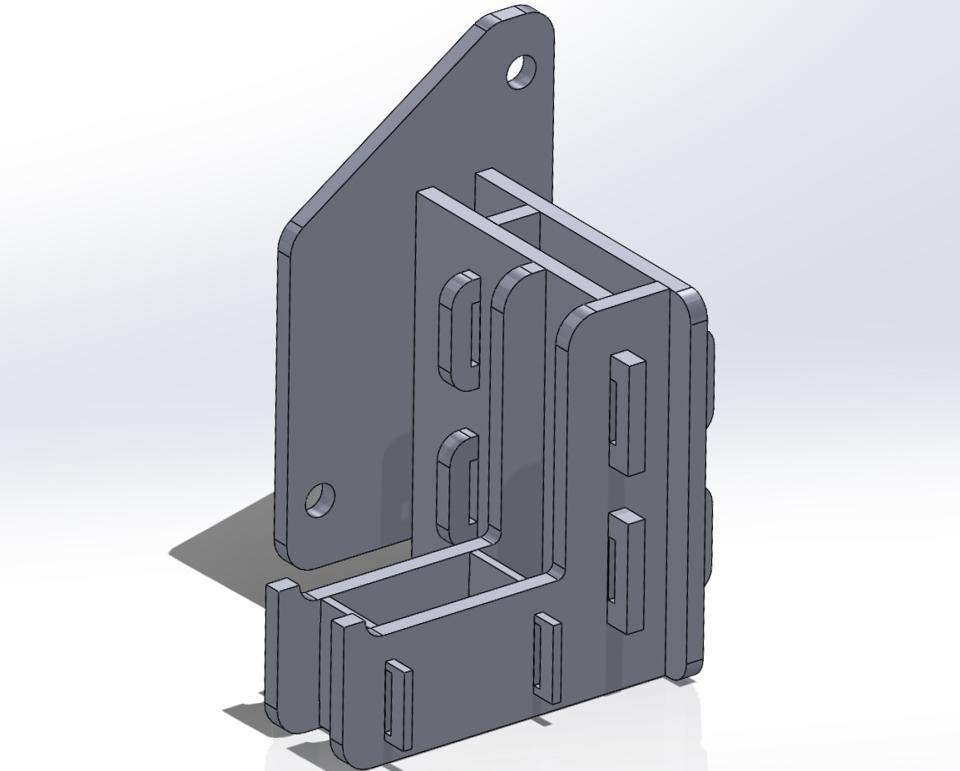
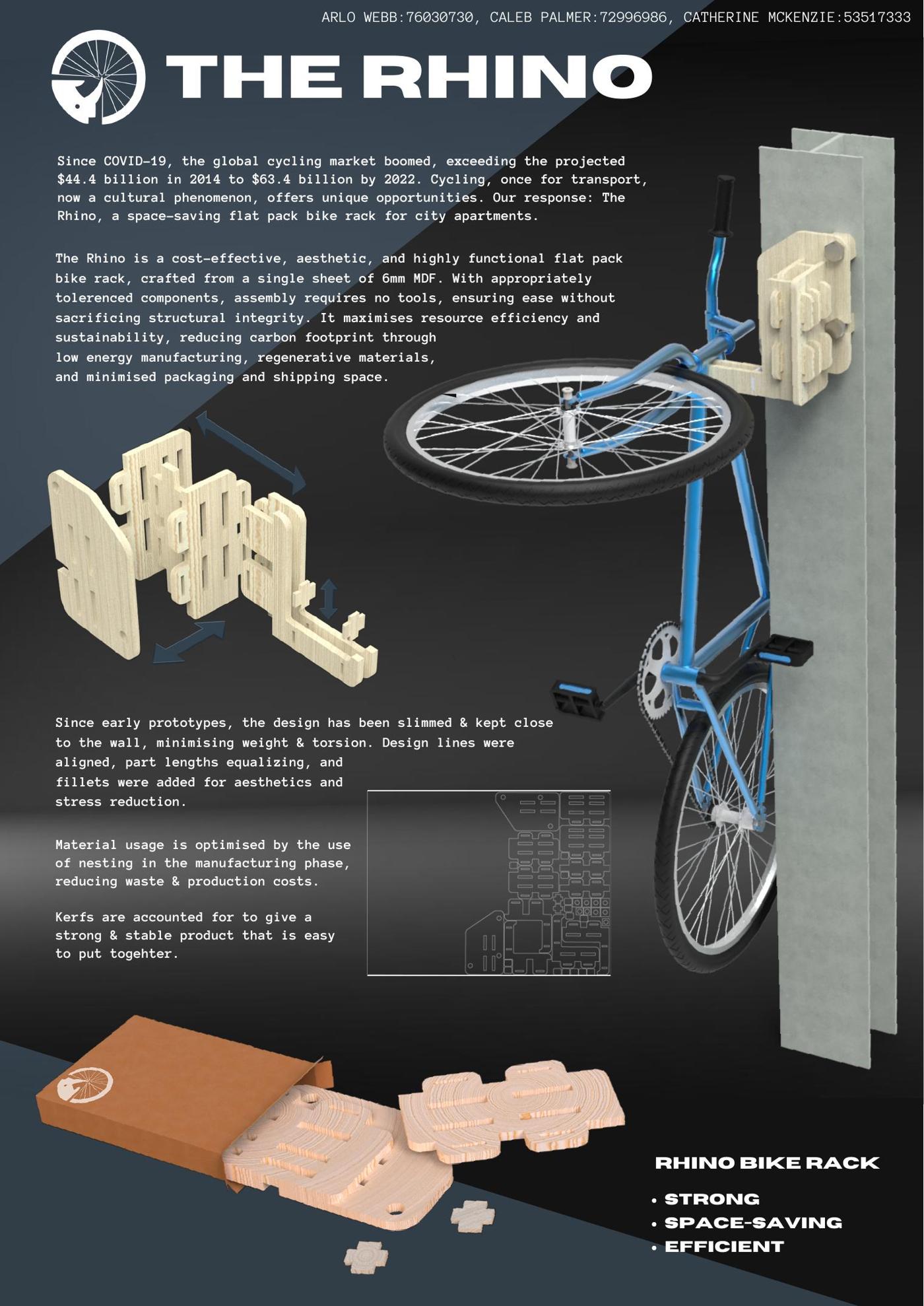
Stage 1: Subtractive Manufacturing
Stage one focused on subtractive manufacturing, using the CAM workspace on Fusion 360 paired with laser cutting. The final design was to be held together with no fasteners or adhesives, meaning the components had to have appropriate tolerance's to fit together tightly, taking into account kerf width. This model was both simulated and physically load tested.
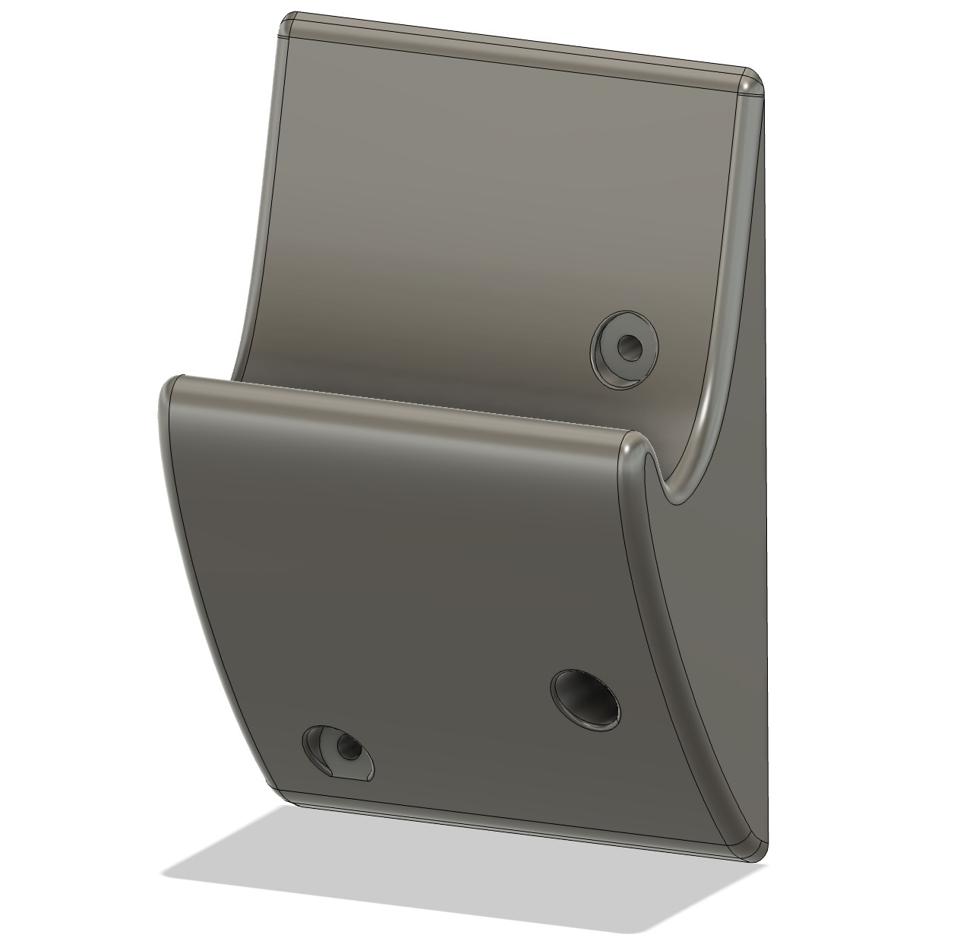
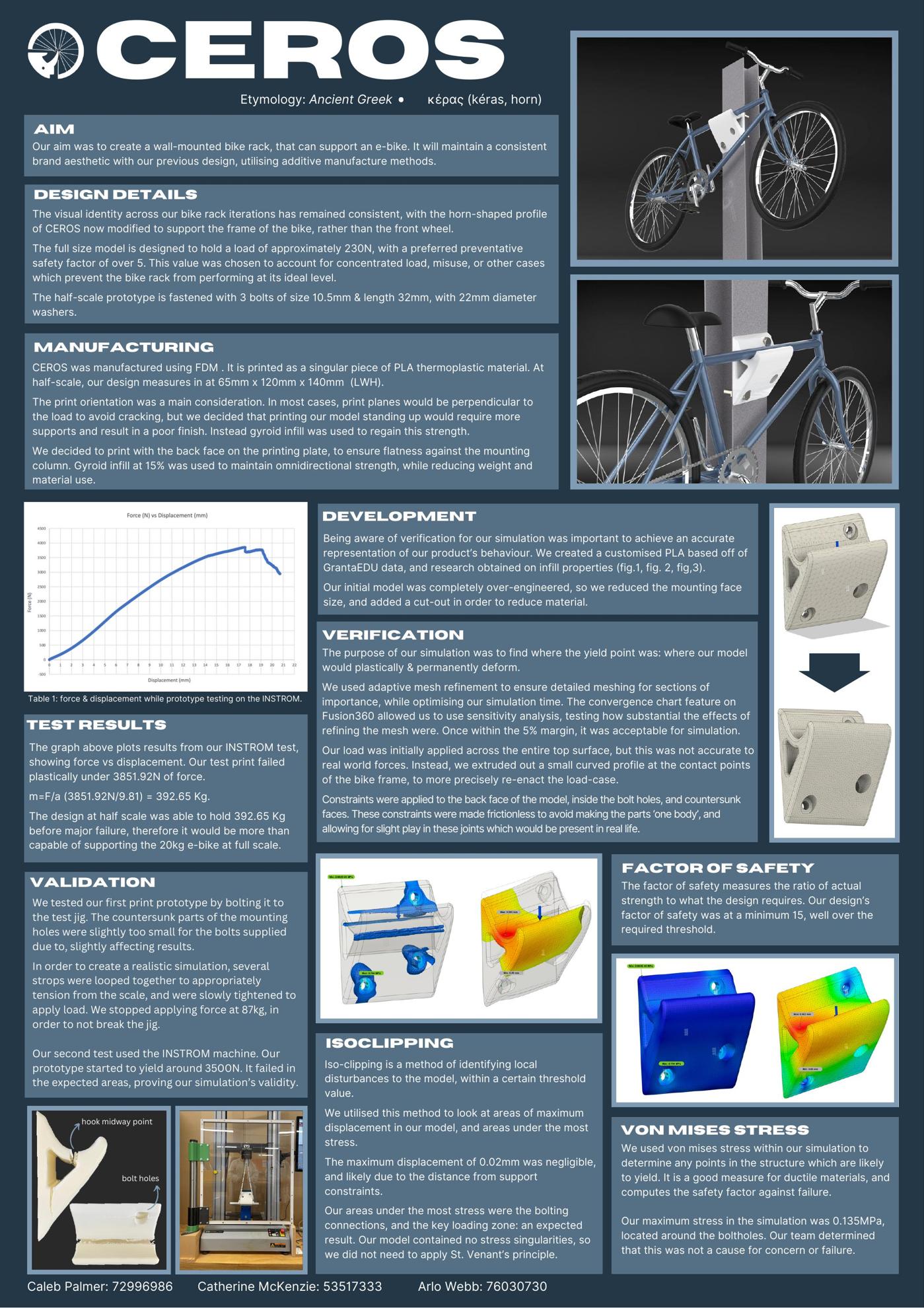
Stage 2: Additive Manufacturing
Stage Two focused on converting our design to be additively manufactured using FDM 3d printing. Important considerations were how we could change our print orientation and infill patterns to optimise strength. Like stage one this design was load tested physically and simulated to validate the design.
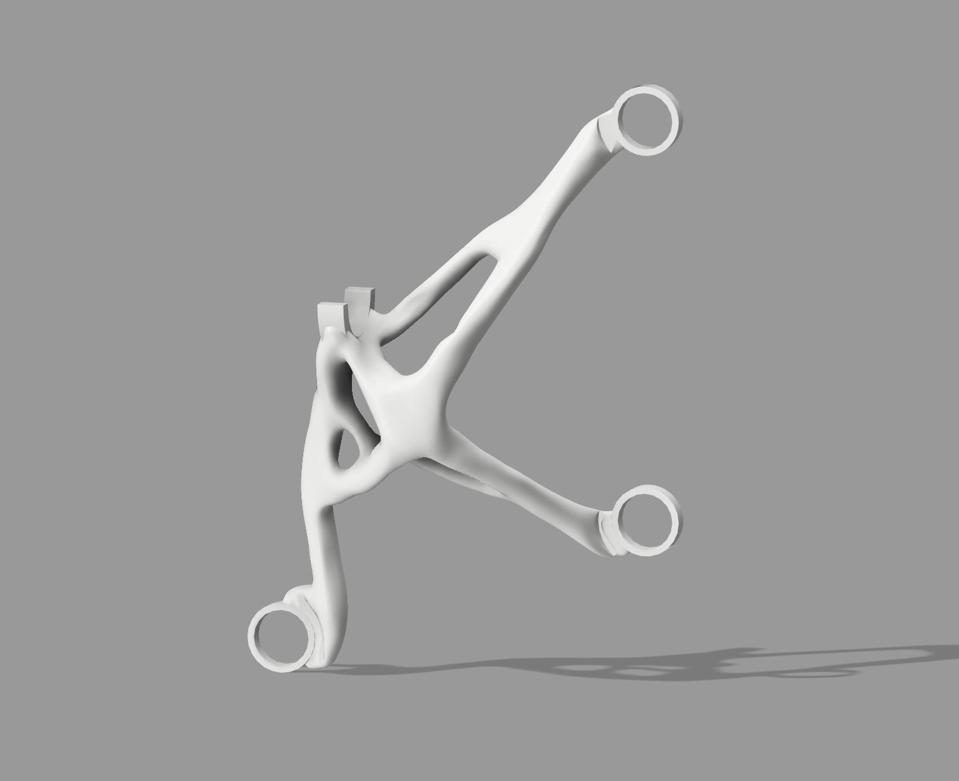
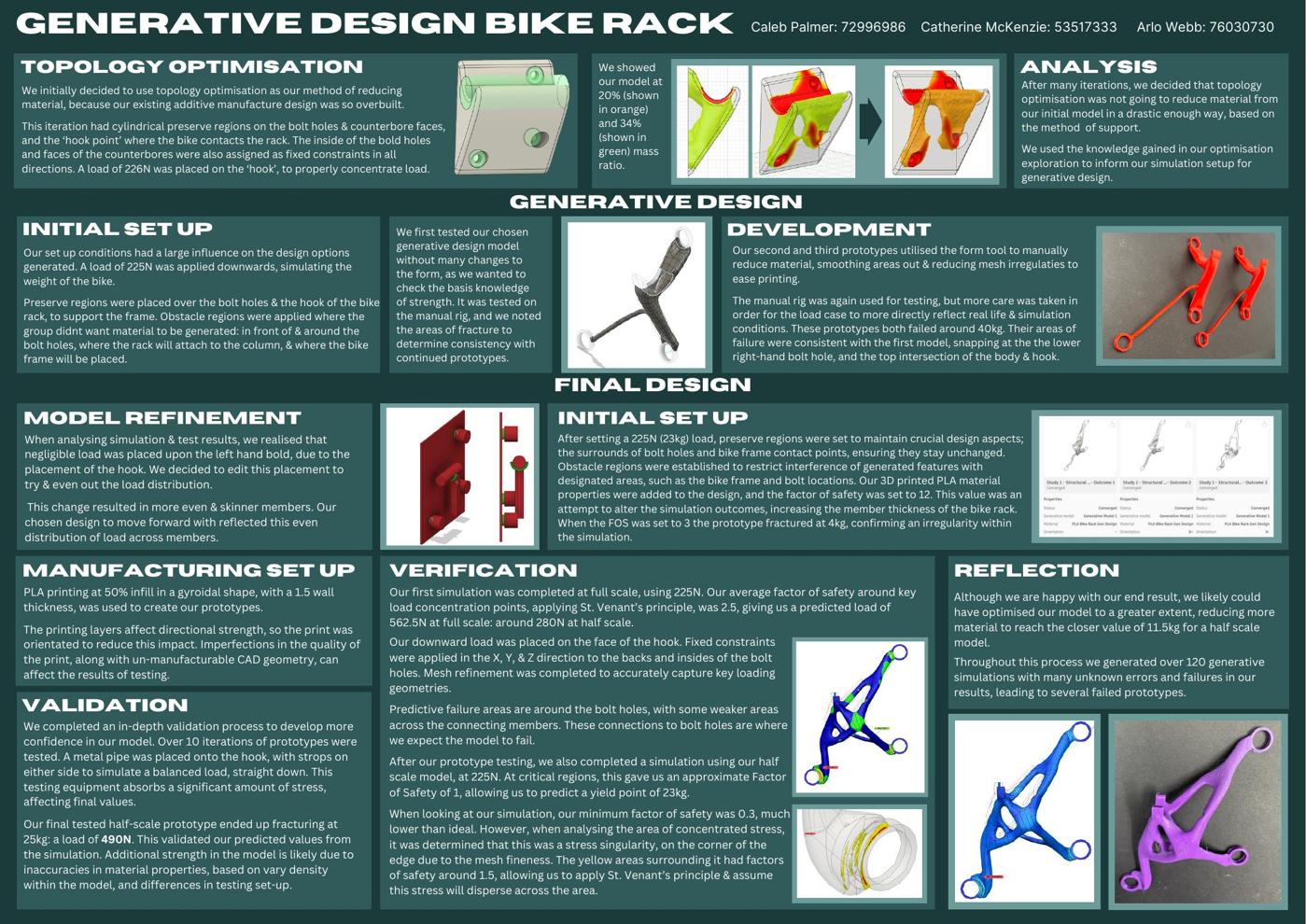
Stage 3: Generative Design
Generative design is a form of artificial intelligence that is available on Fusion360. For this process, we started by defining key parts of the design like the preserve and obstacle regions, then applied loads and materials. Once completed we generated a structure which adheres to a given factor of safety while prioritising mass minimisation. See more about this on the posters below.
Posters