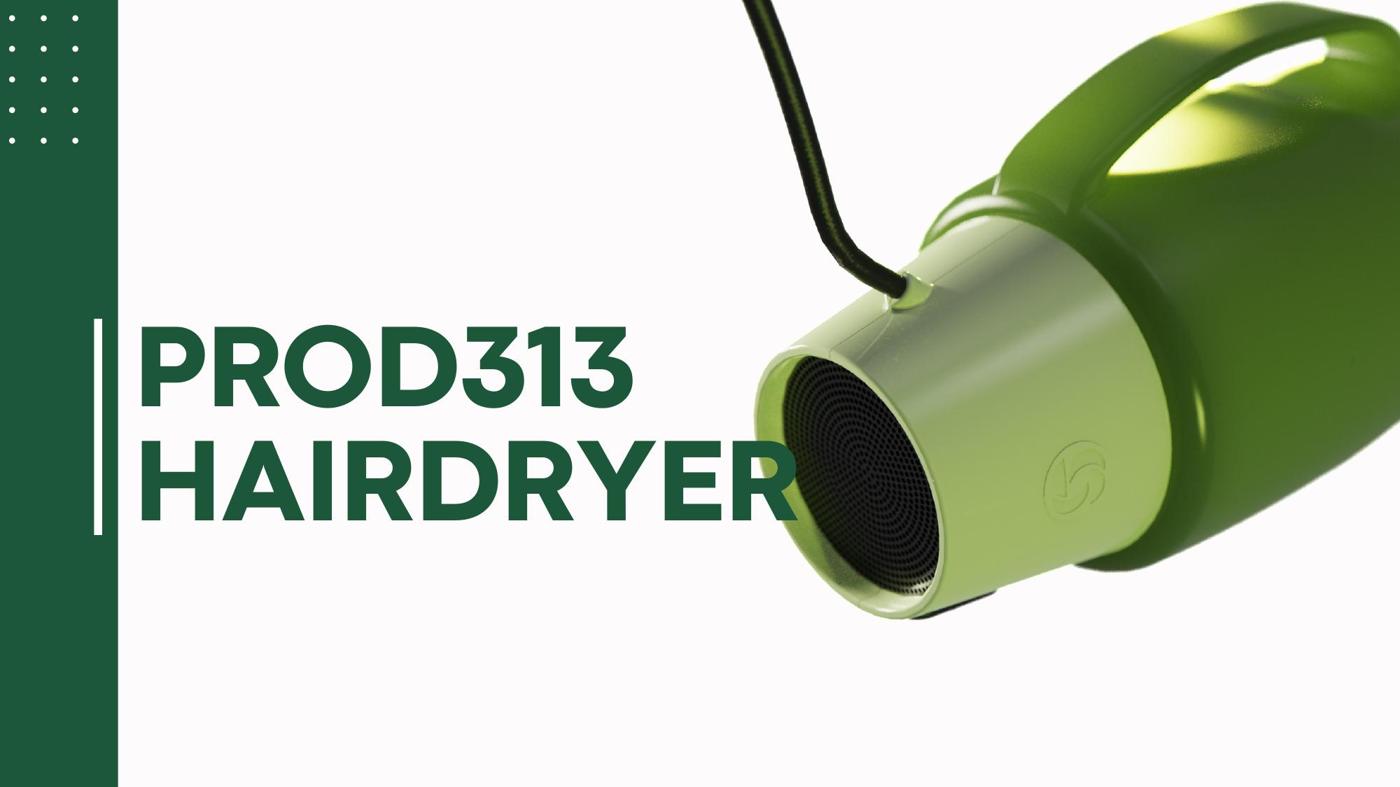
Selene Hairdryer
For Low Grip Disabilities
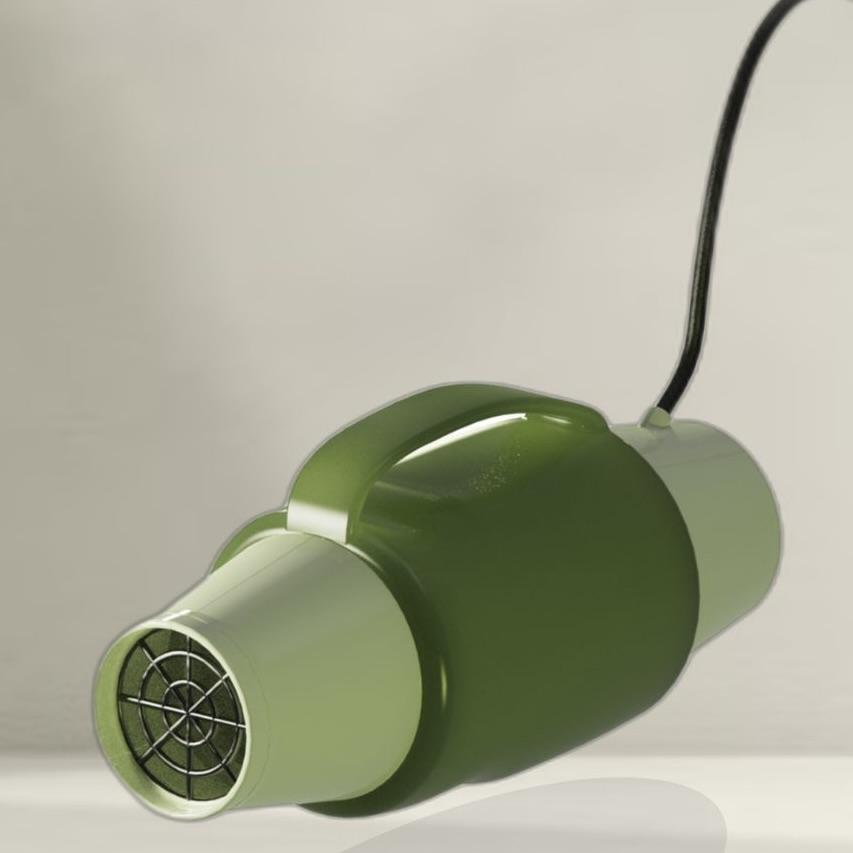
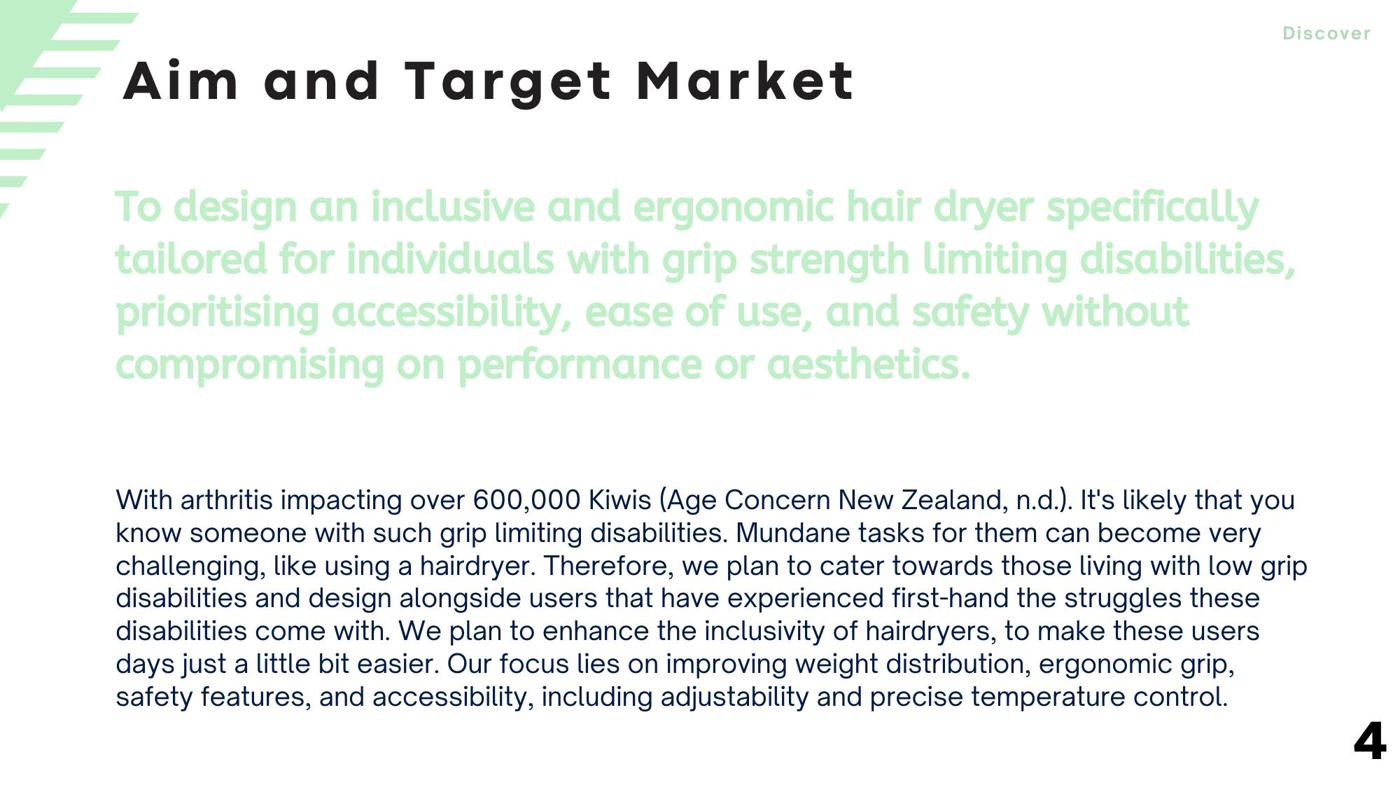
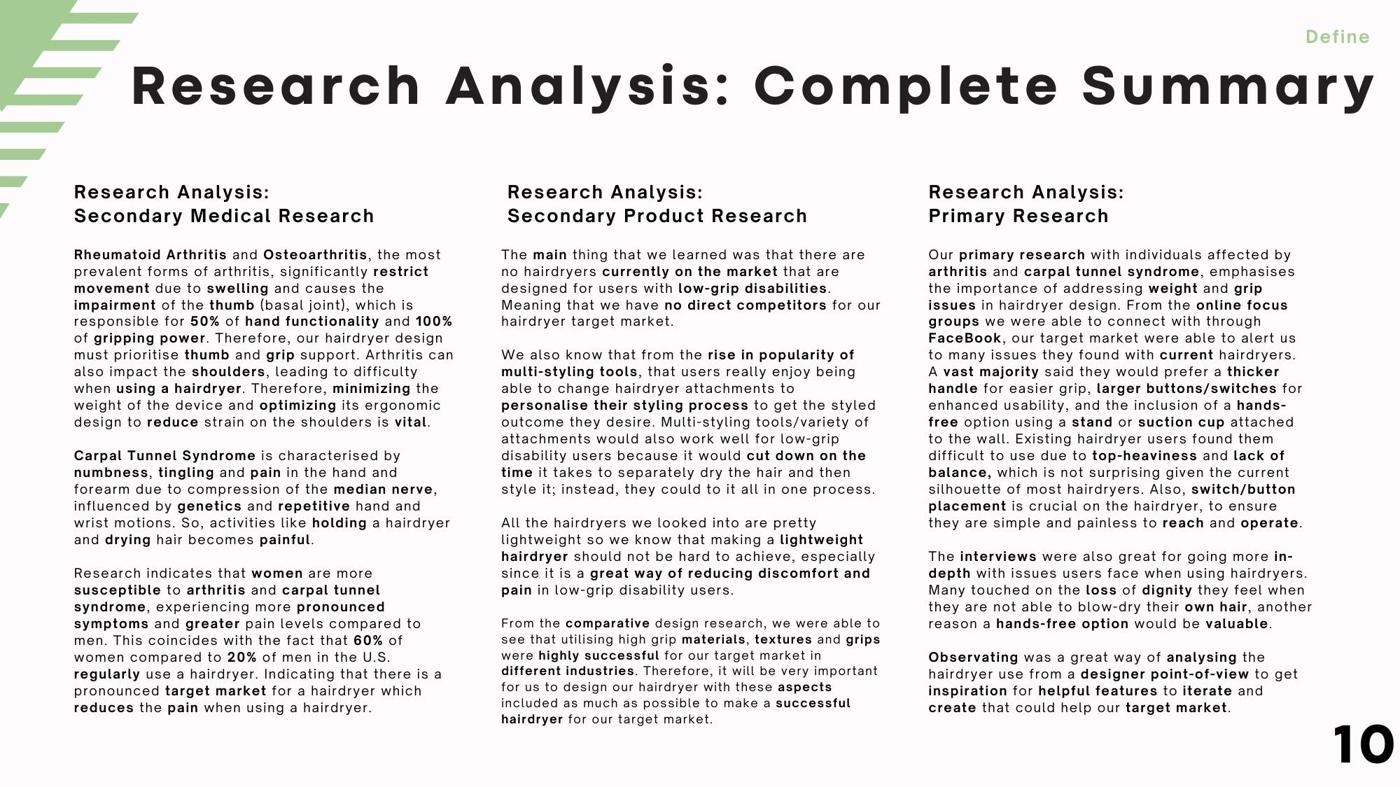
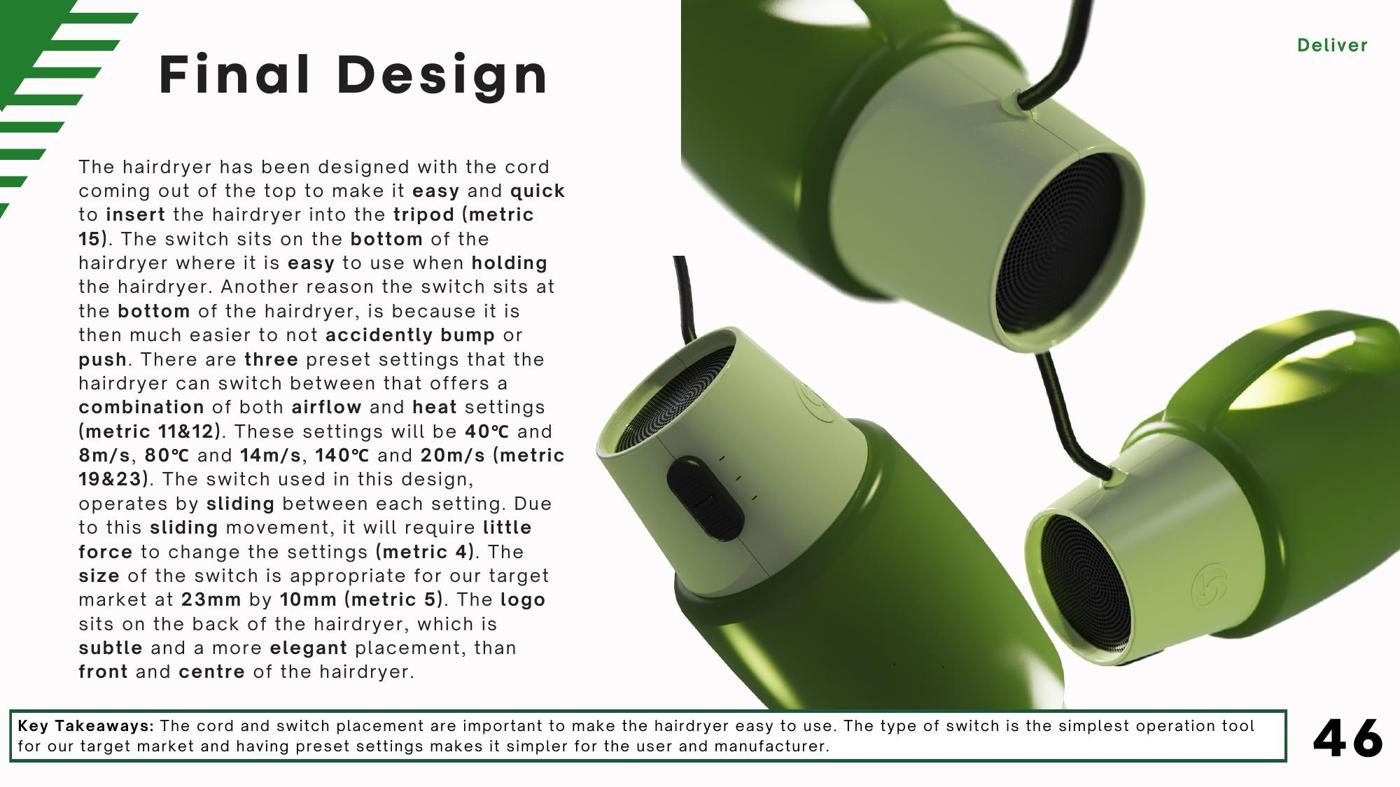
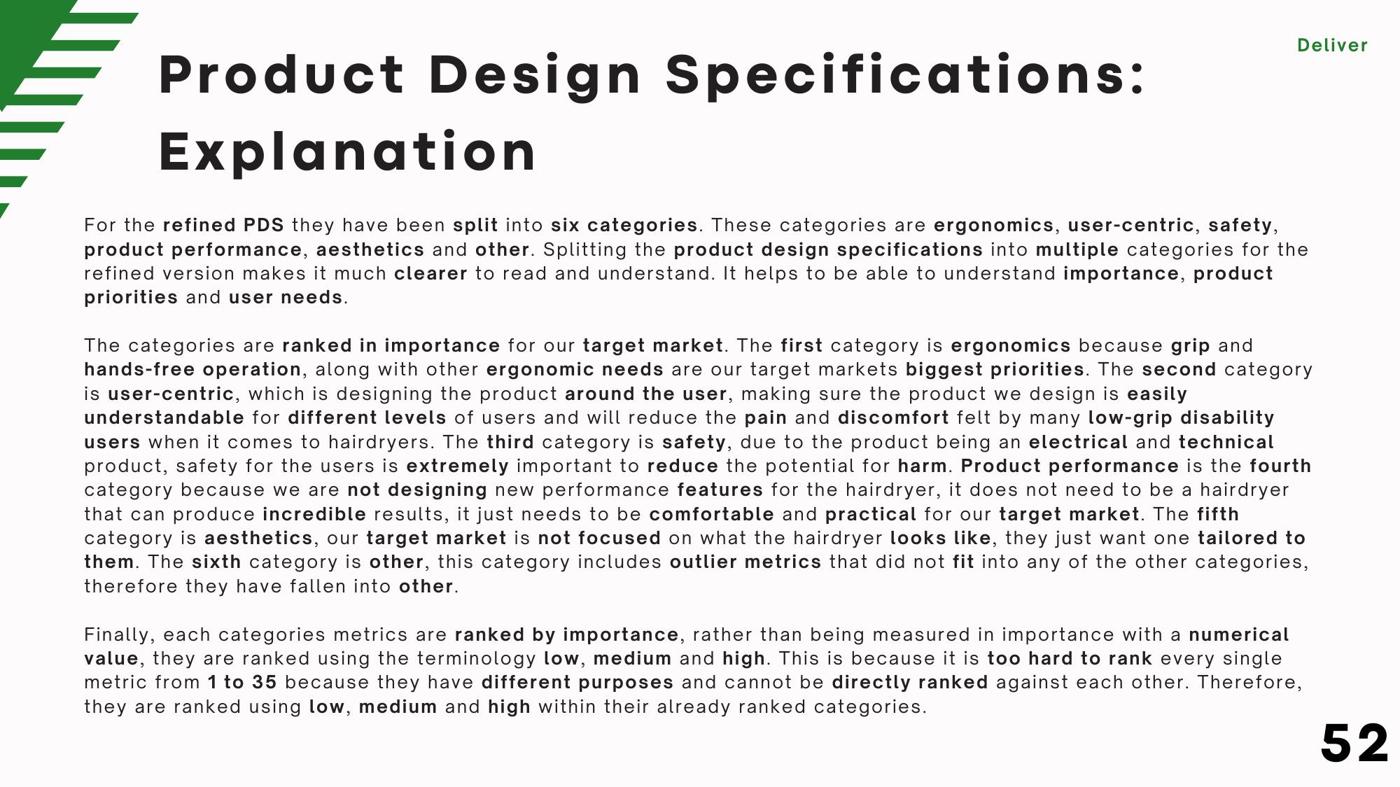
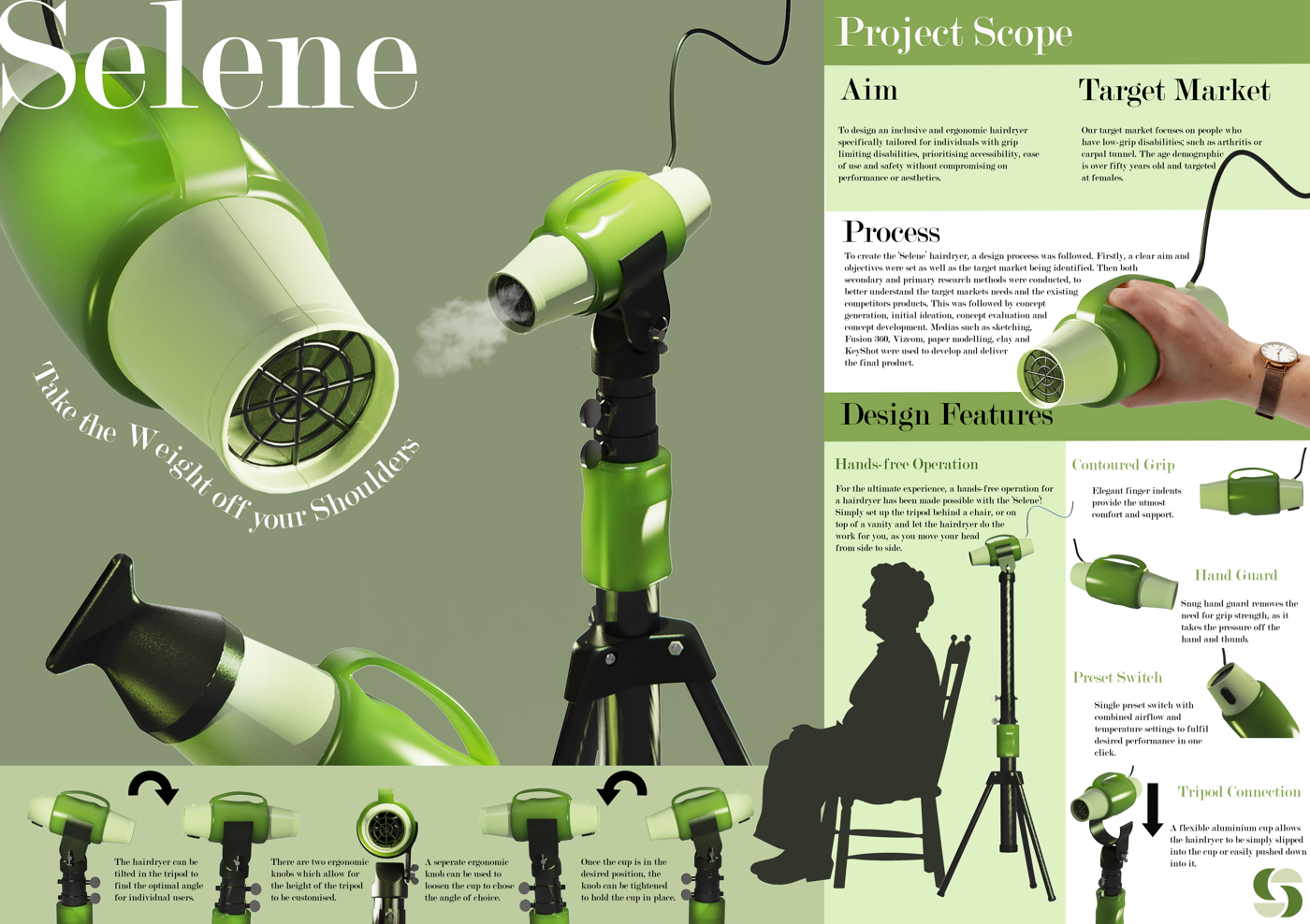
The 'Selene' hairdryer was designed within a two person university group for users with low-grip disabilities such as arthritis and carpal tunnel syndrome.

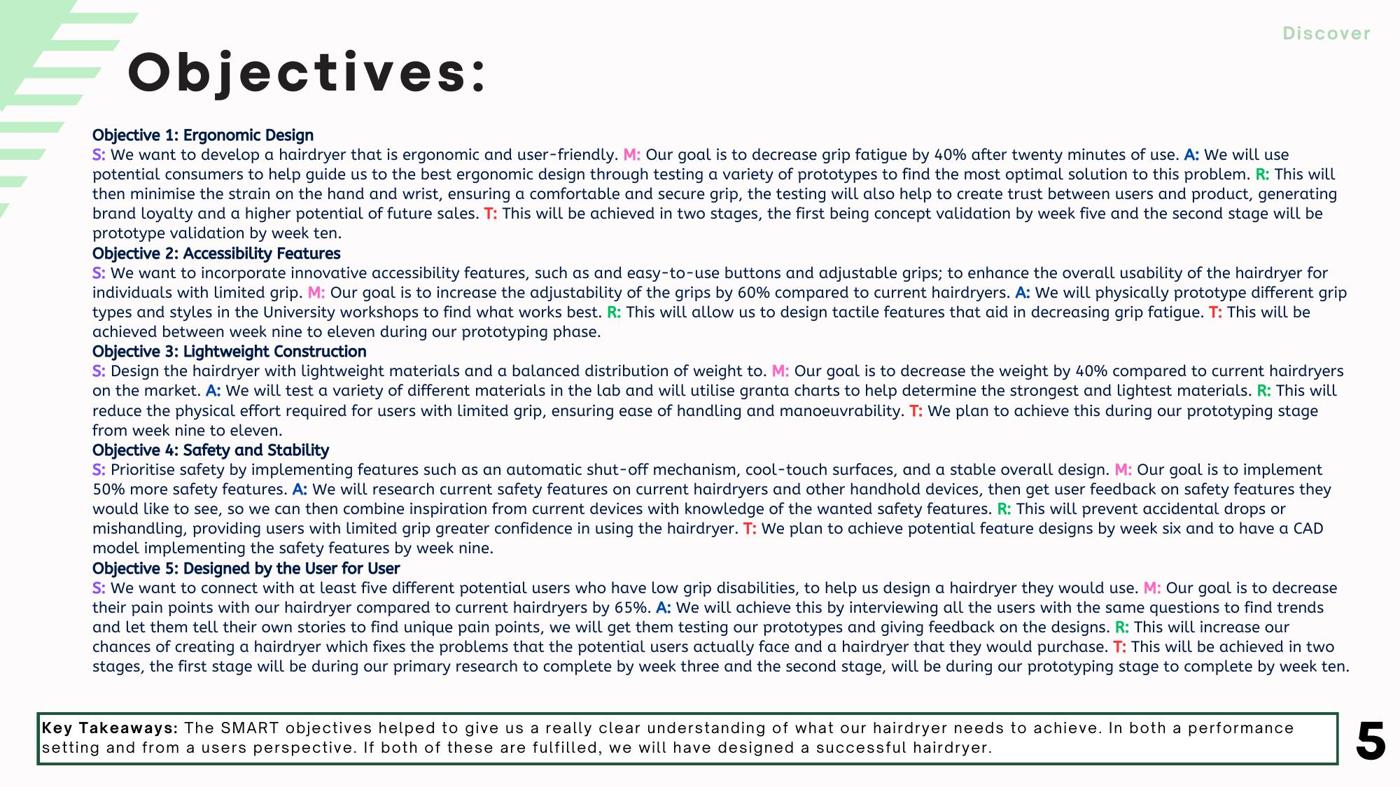
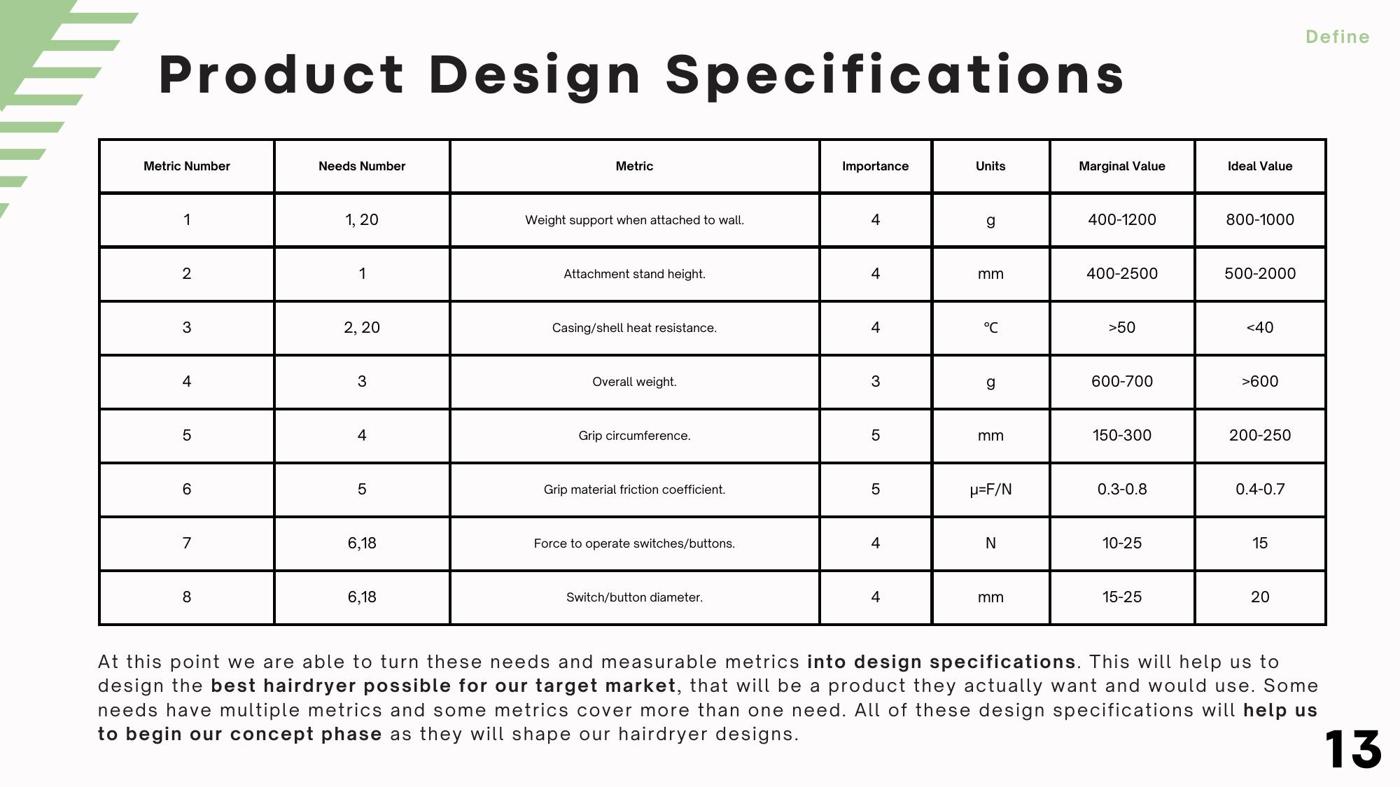
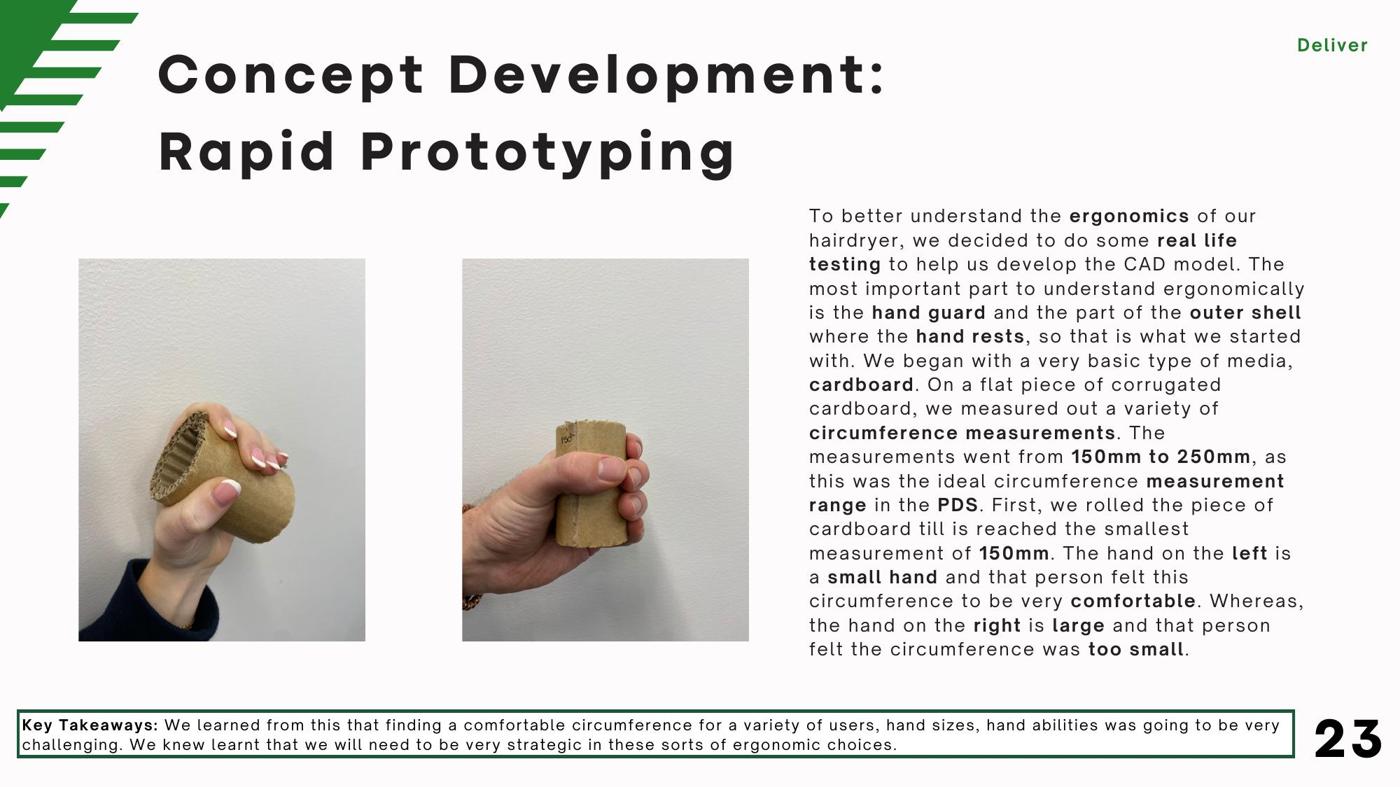
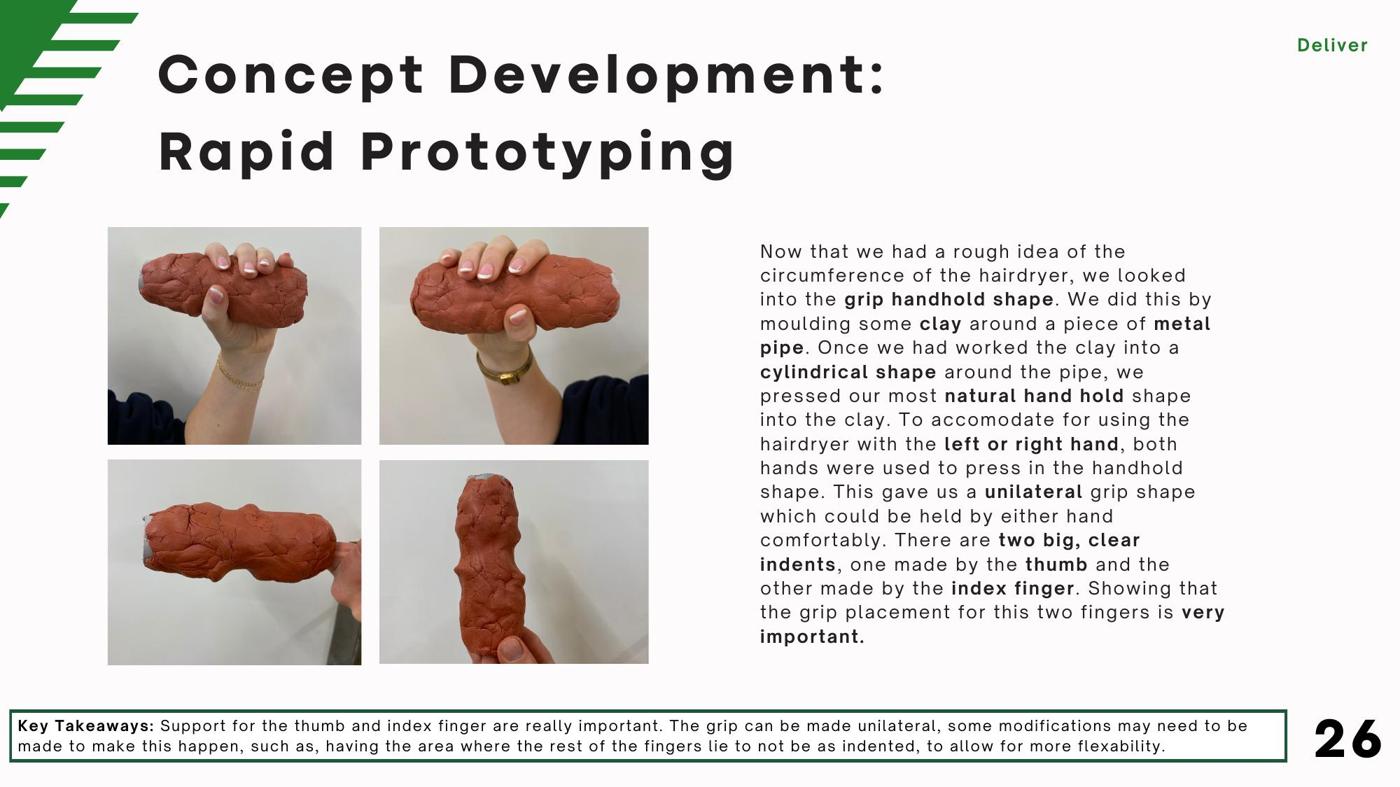
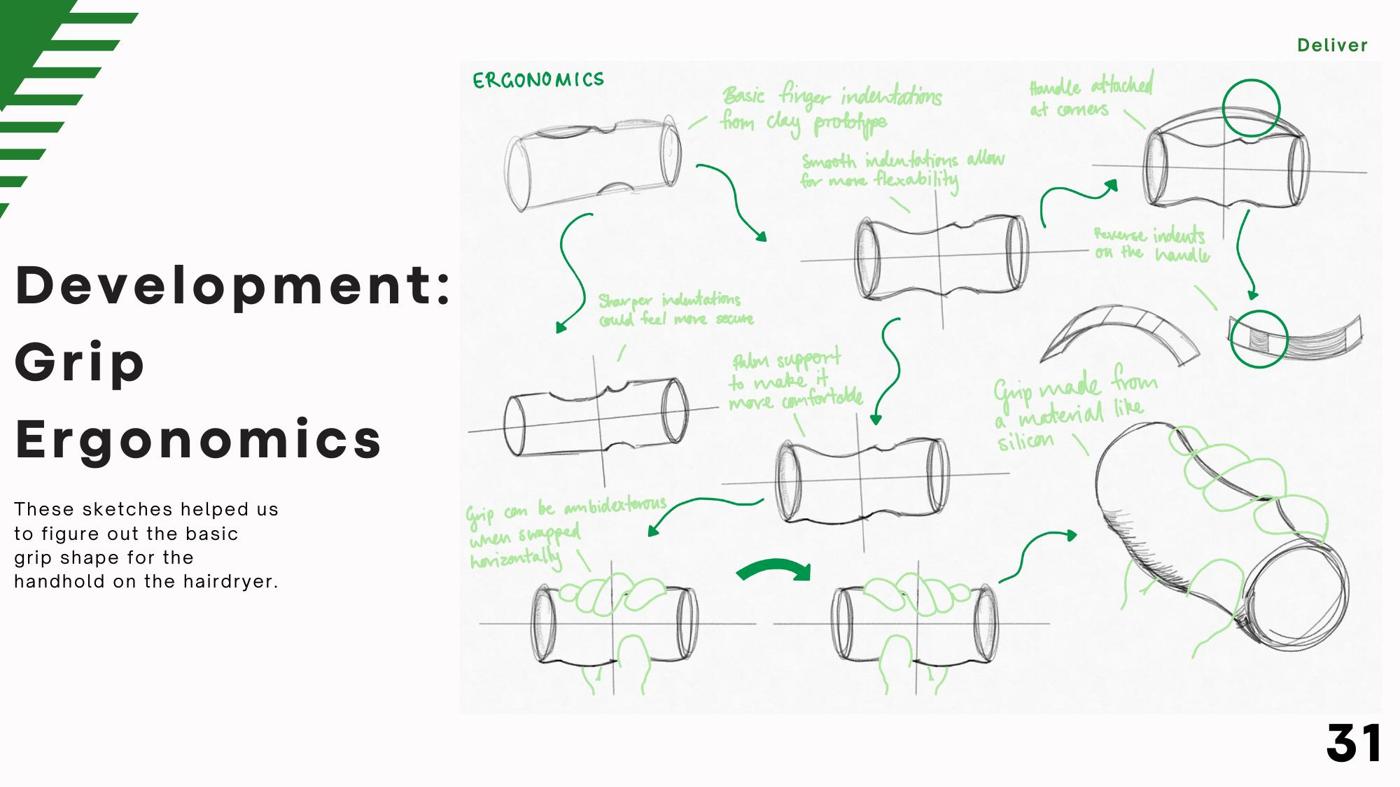
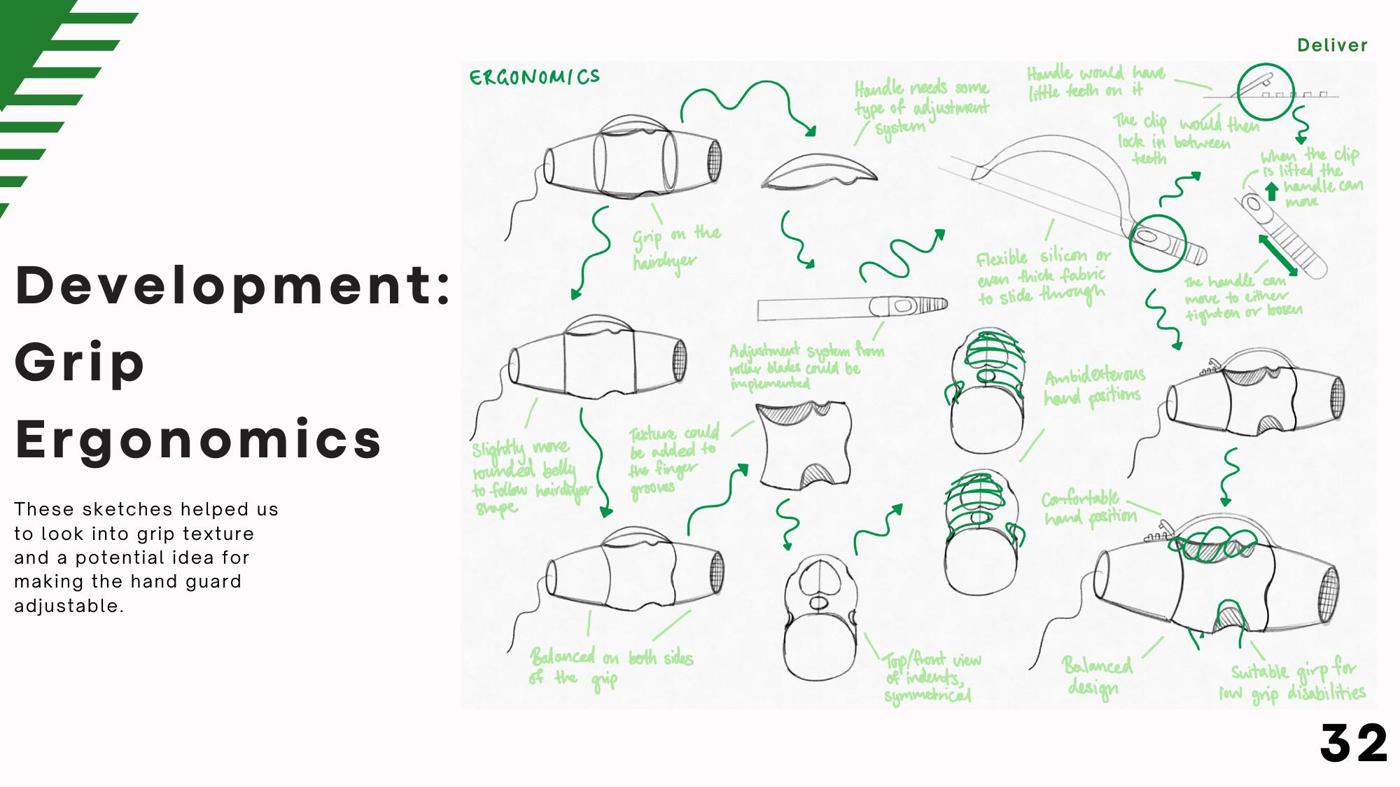
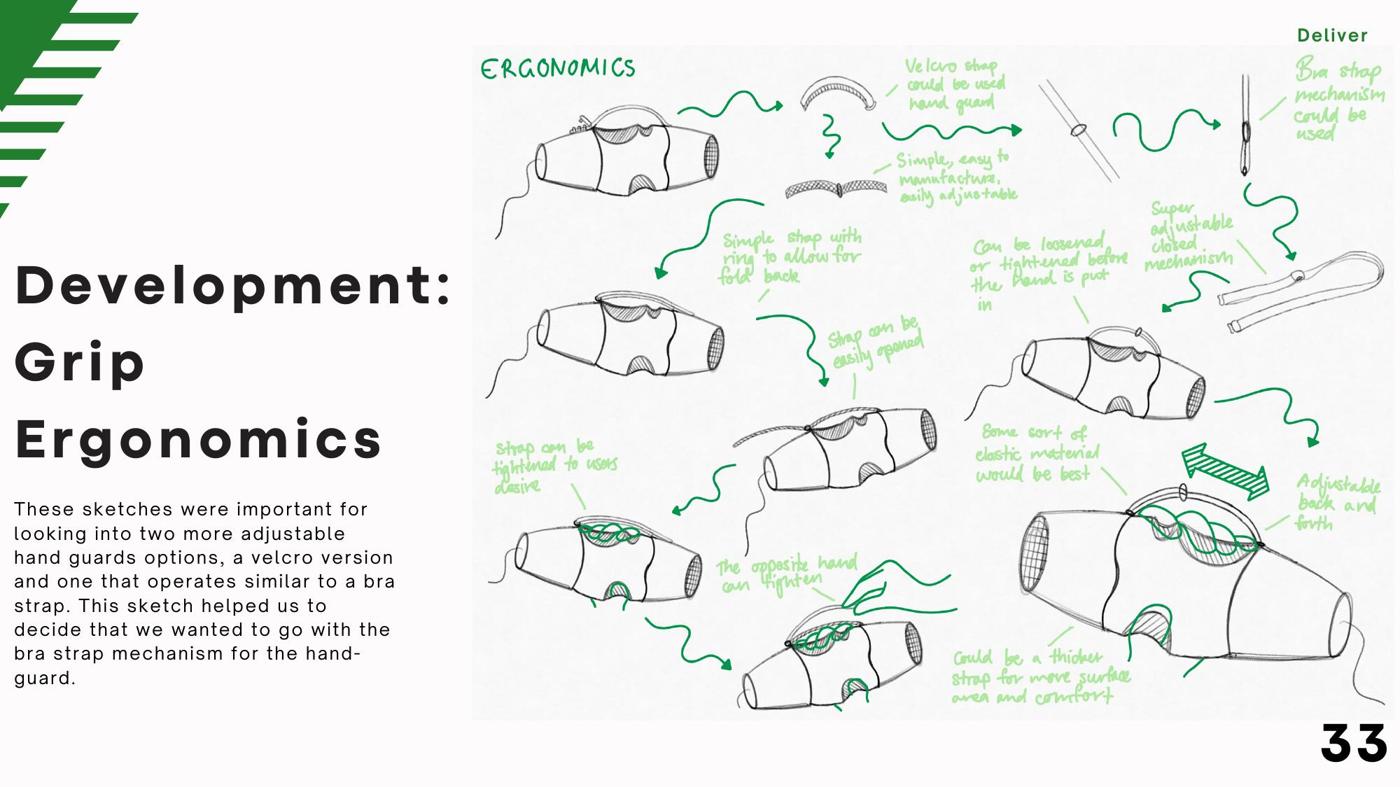
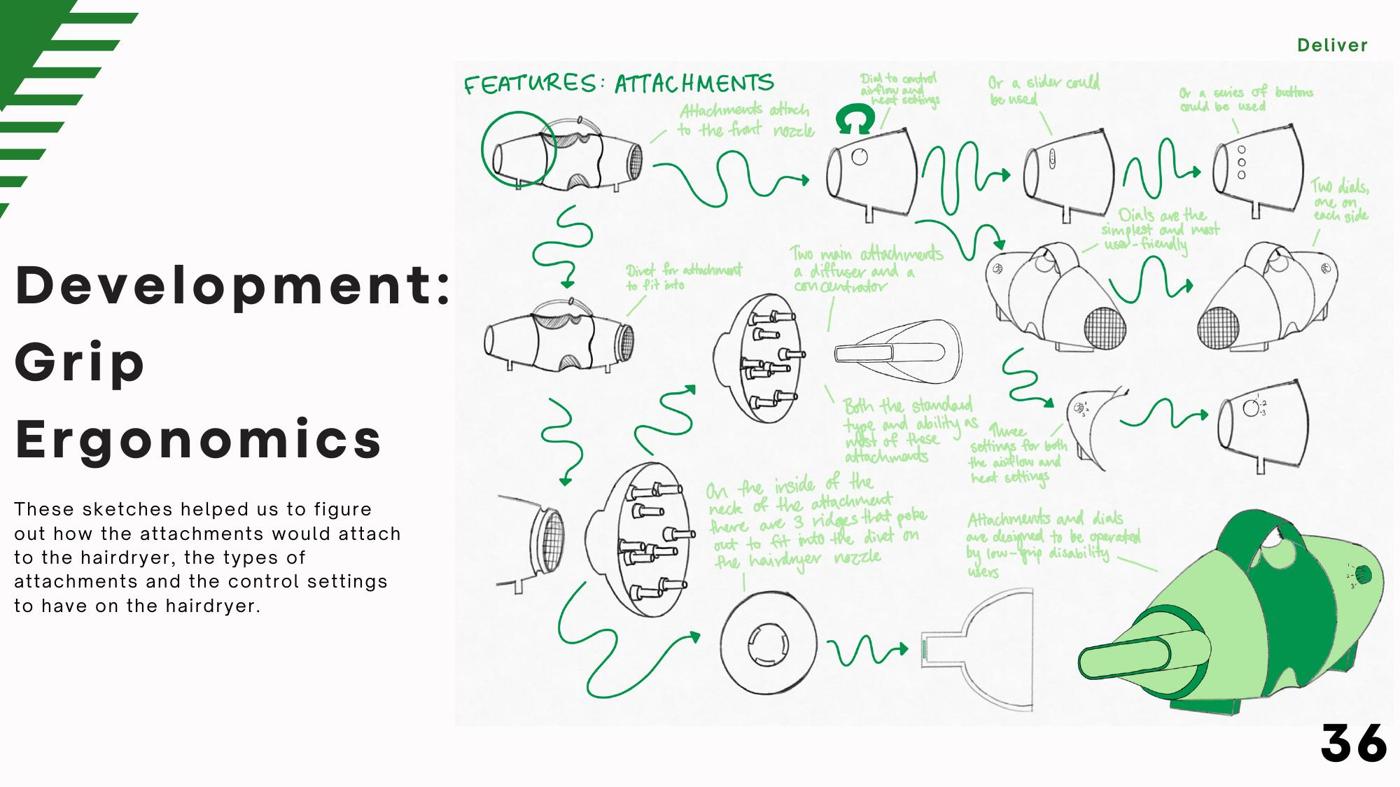
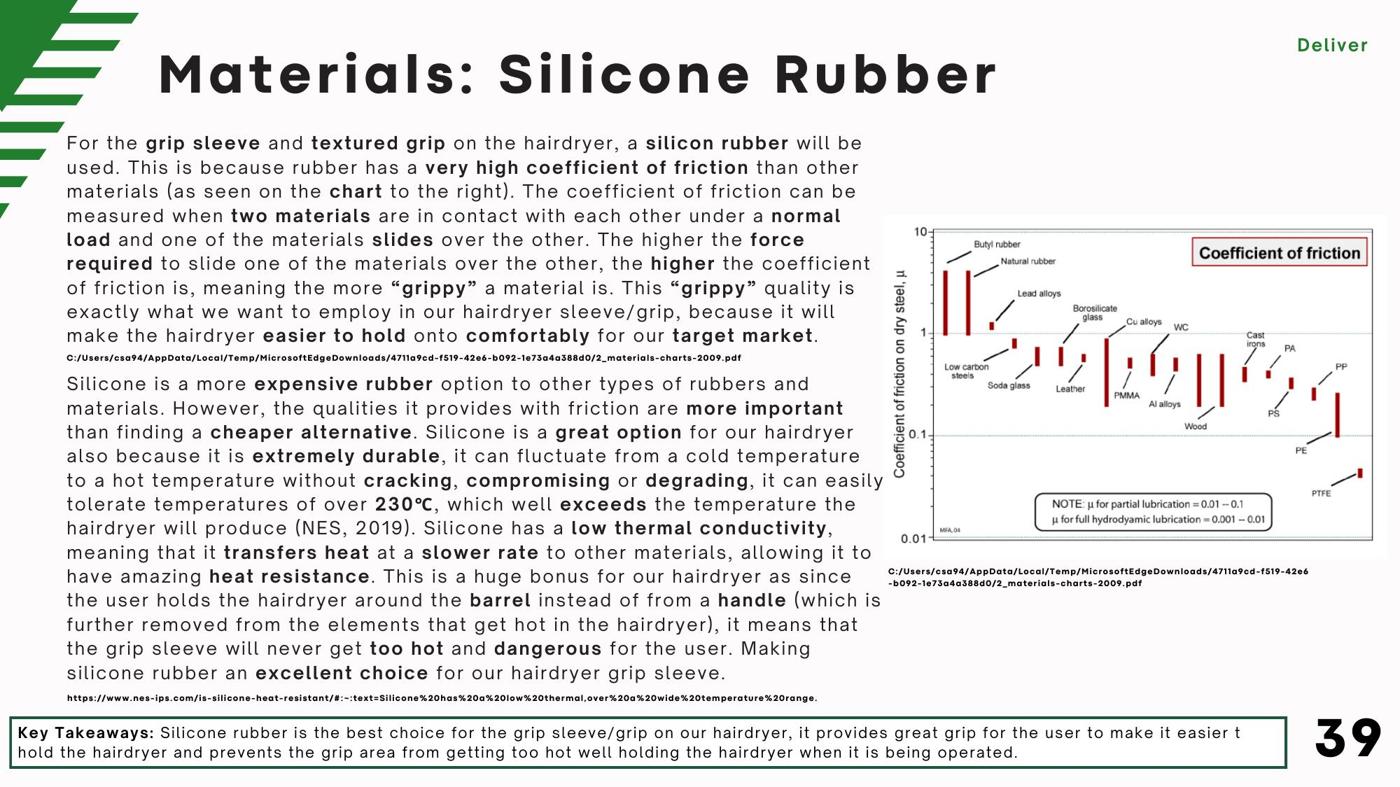
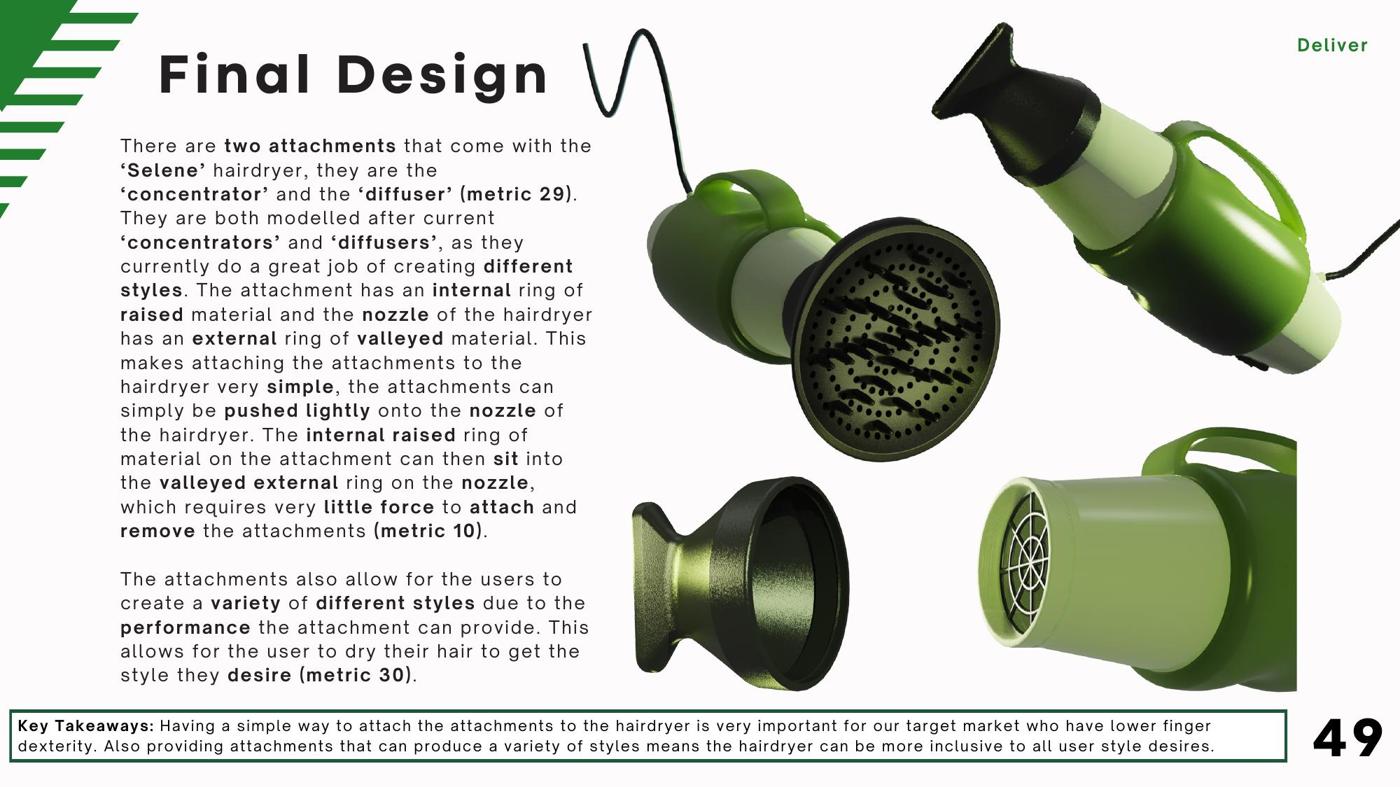
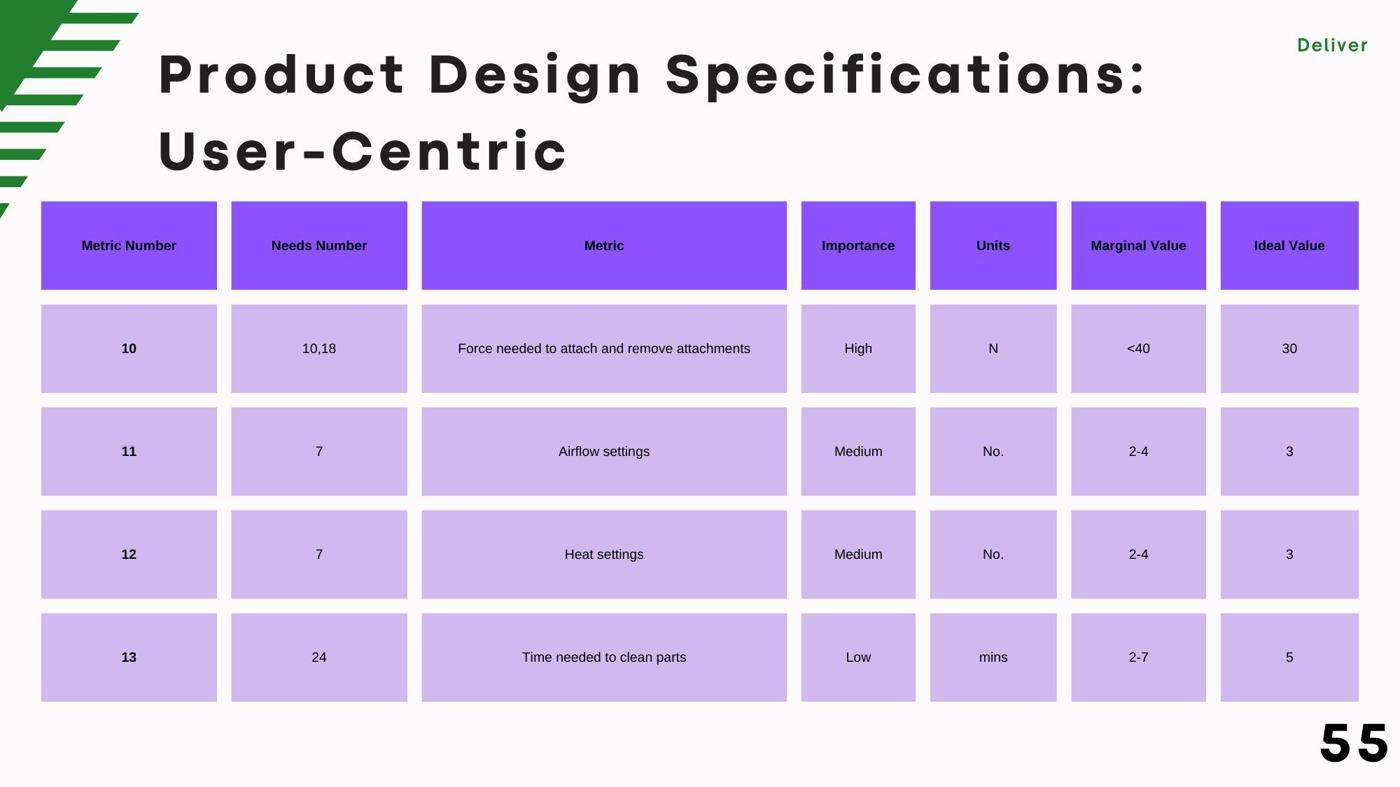
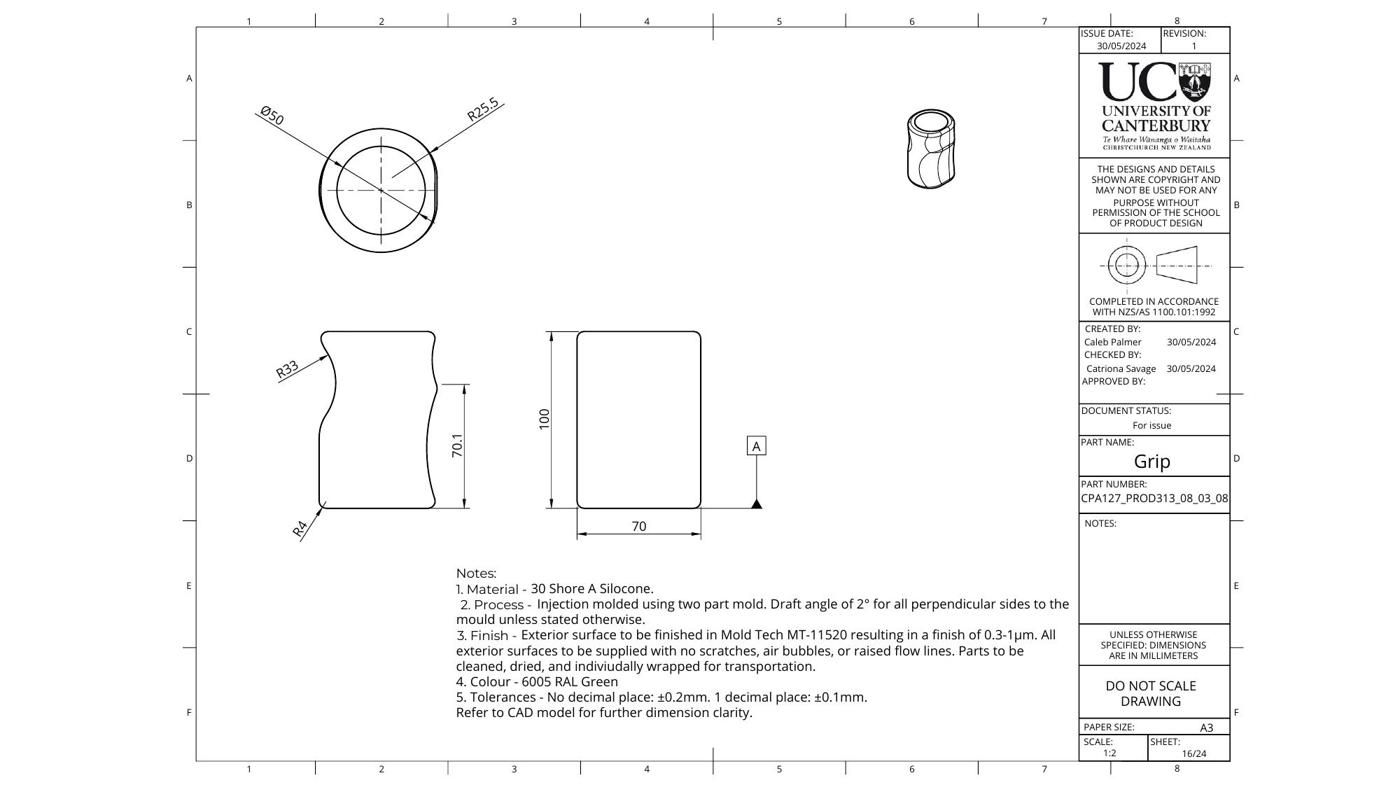
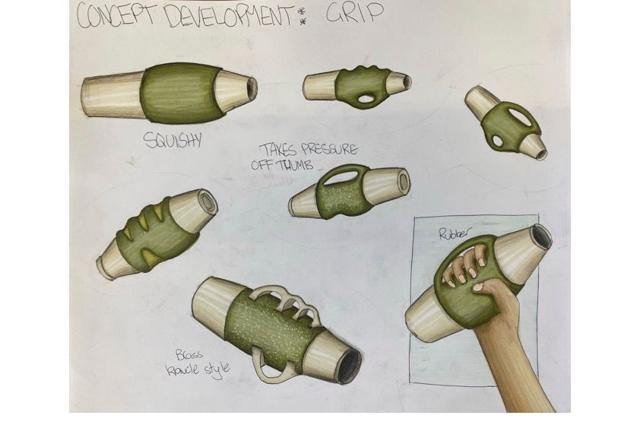
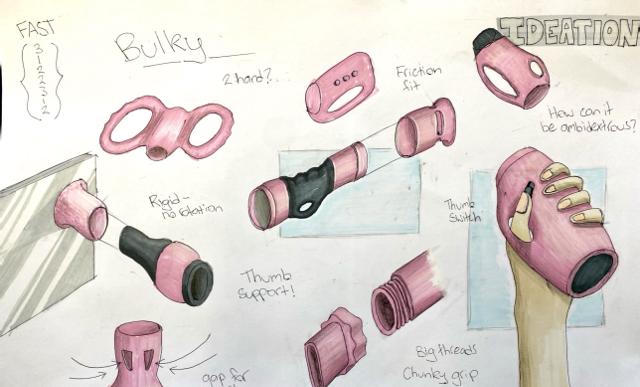
It features a squishy silicone grip sleeve which has a wide circumference to be more comfortable for those with low grip disabilities. The sleeve has finger contoured mouldings to provide comfort and support, and a stretchy hand guard that locks in users fingers to take pressure off the thumb joint and to help the user be less reliant on grip strength in general. Silicone was used for the grip sleeve due to its high friction coefficient of 0.7.

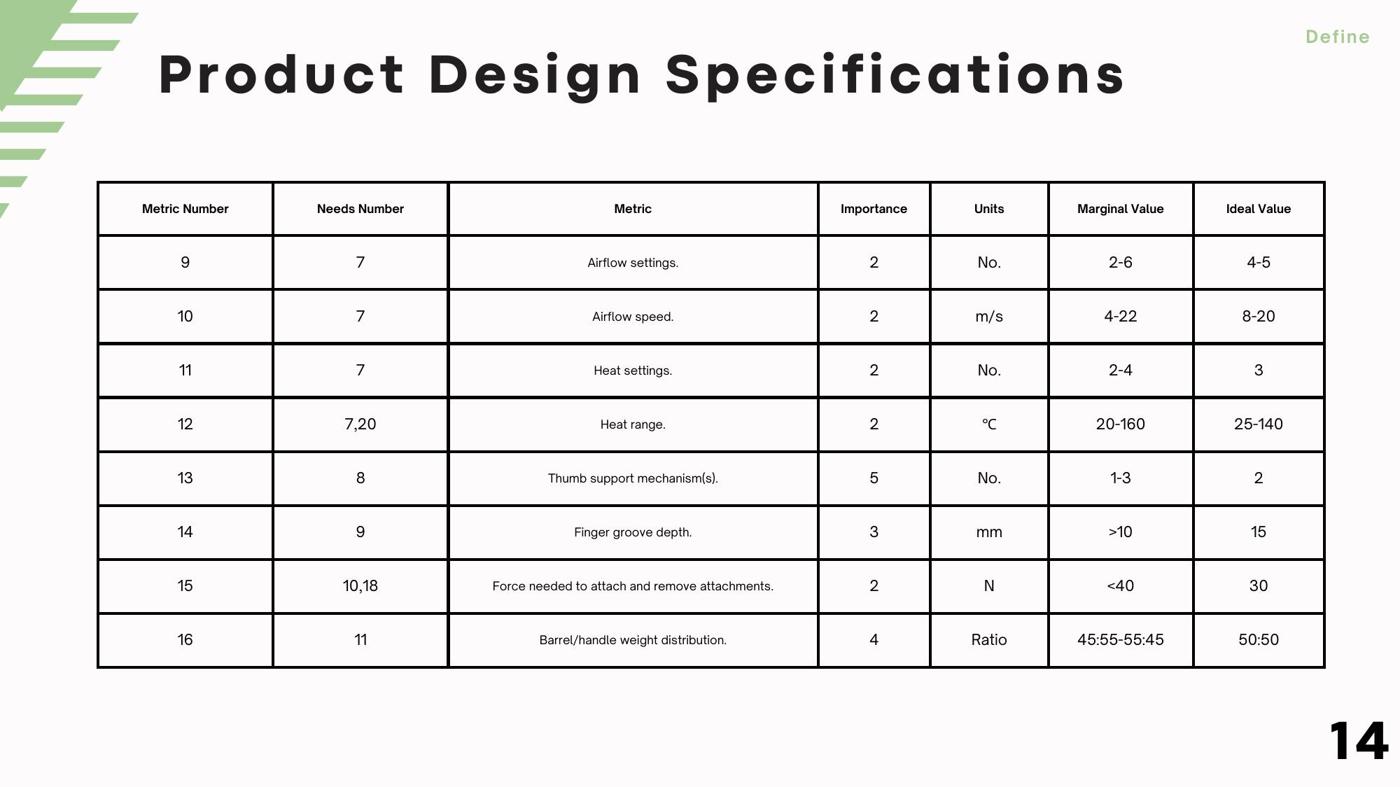
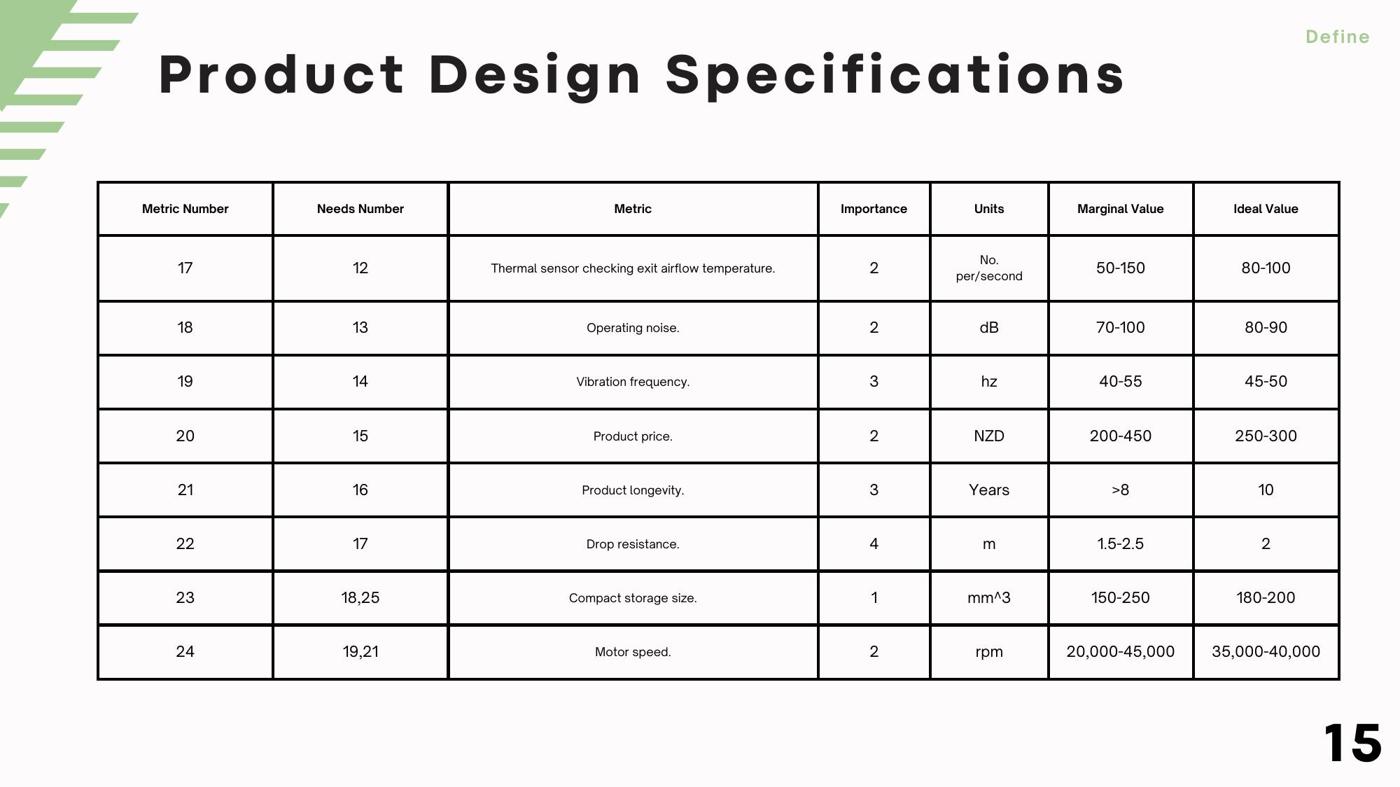
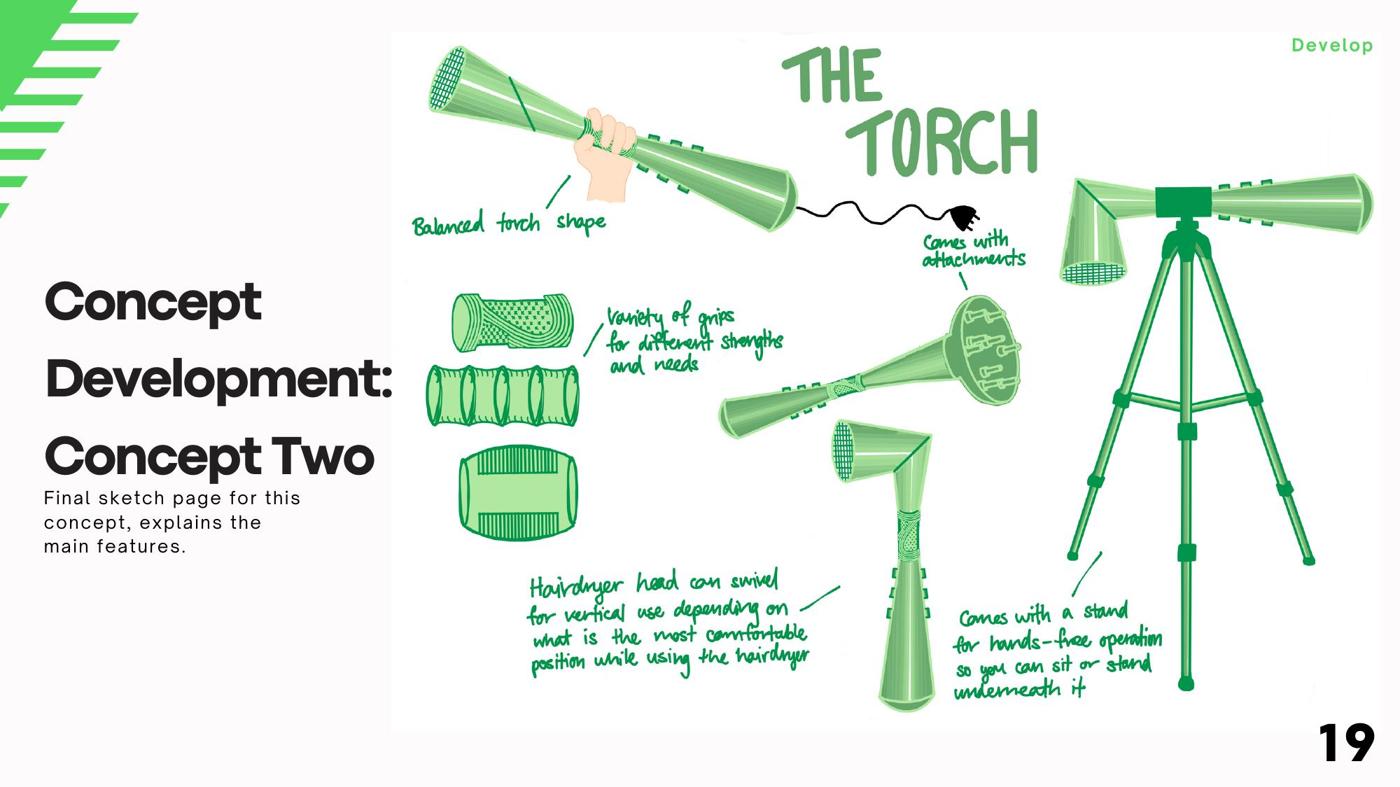
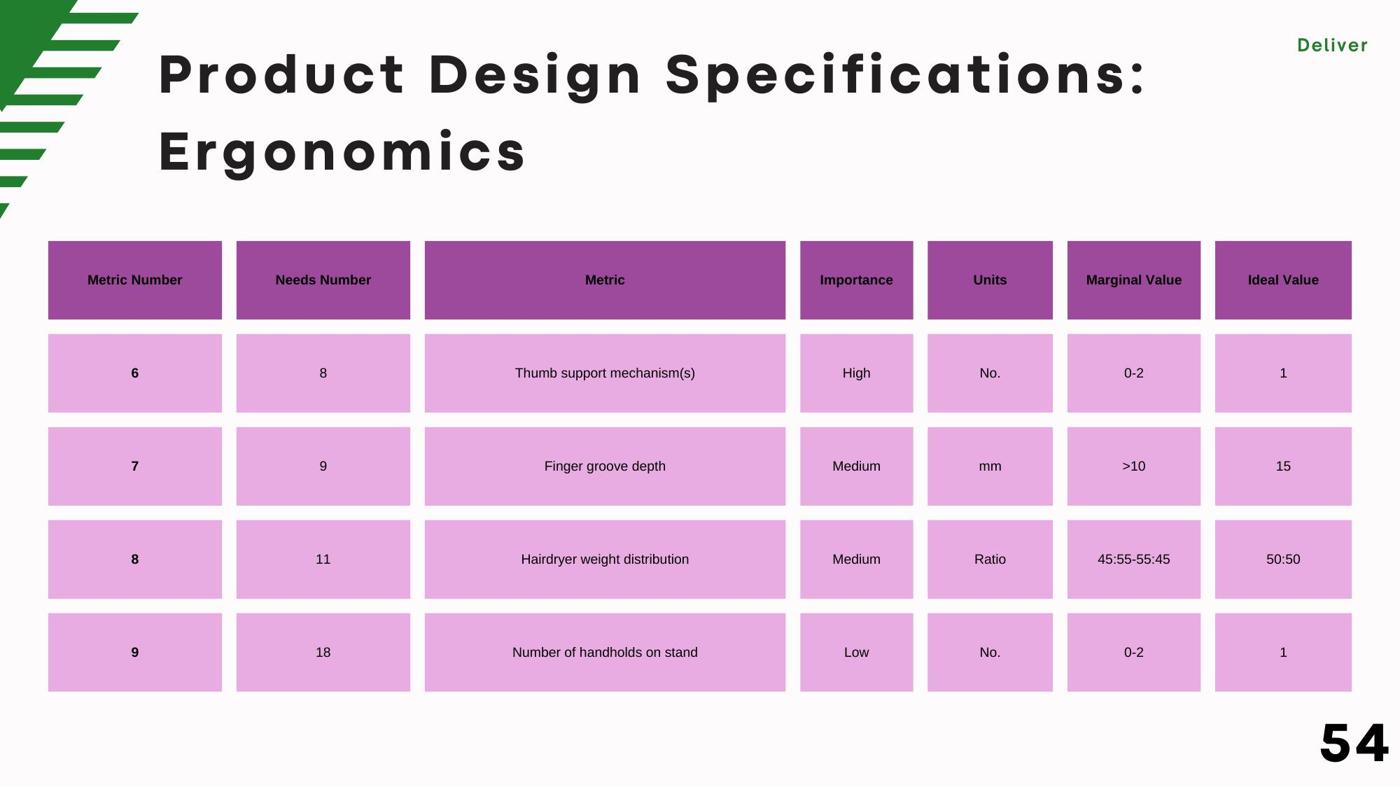
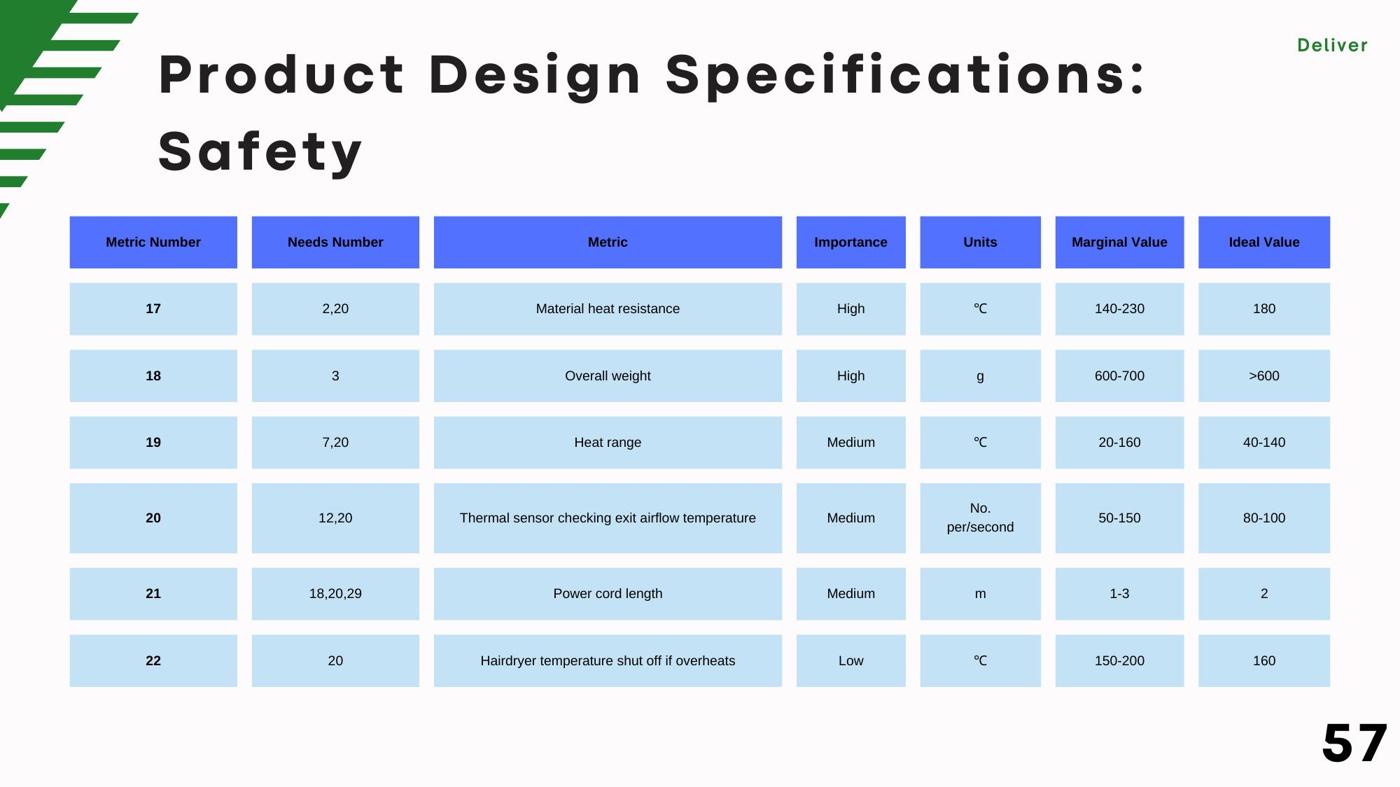
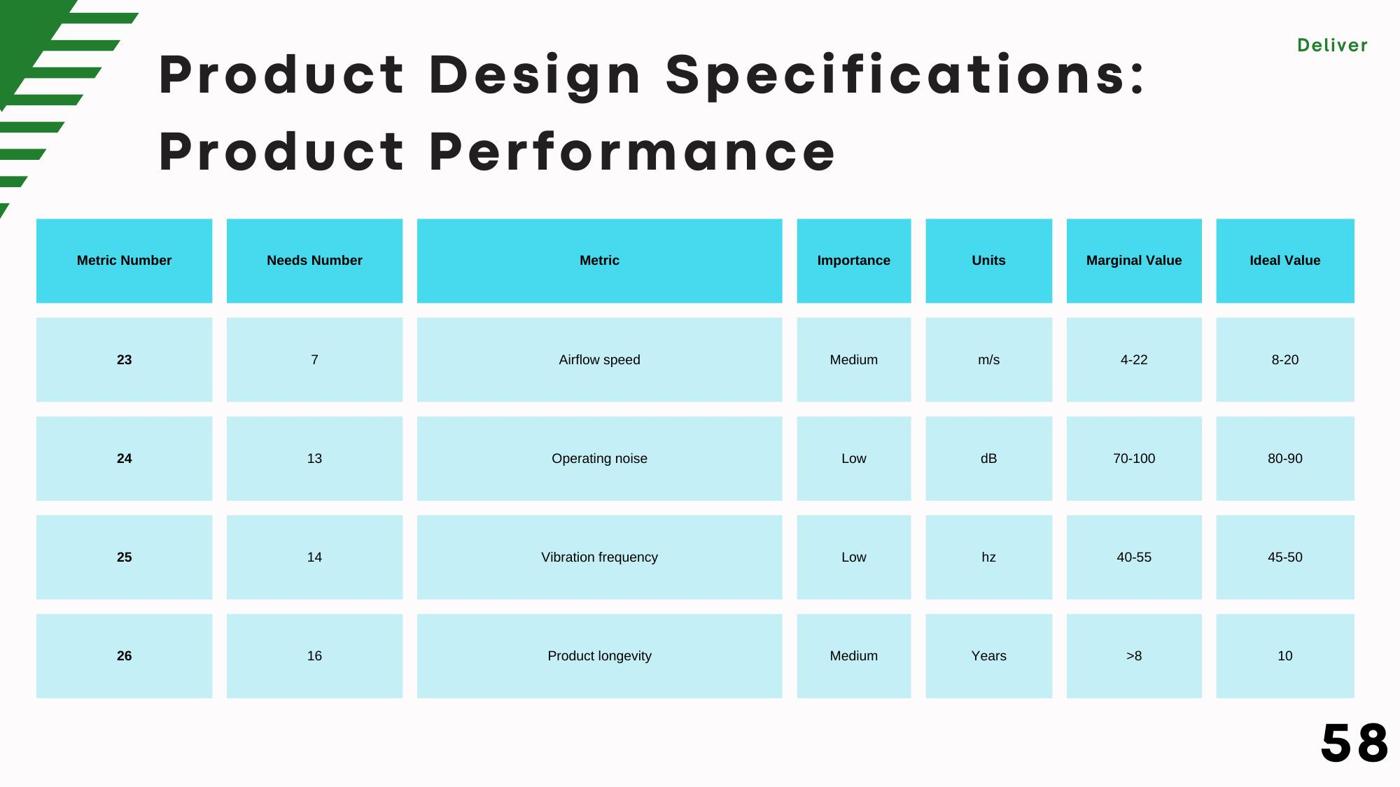
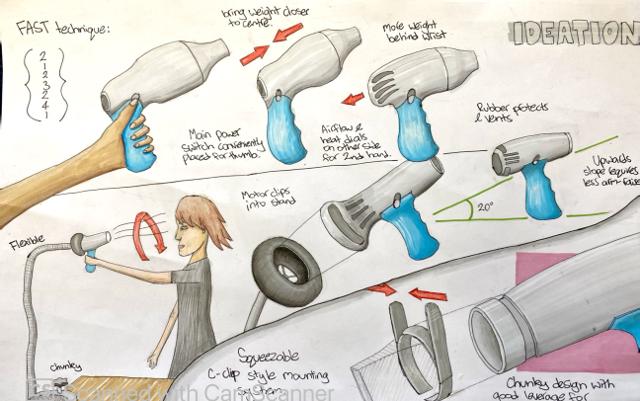
Due to its torch-like shape, the Selene features a 50/50 weight ratio, eliminating any added strain carrying a lopsided object would bring. Because of it's compact design and the use of the lightweight ABS for the outer shell, the overall weight is 0.6kg, meaning holding our hairdryer for a long periods of time is comfortable.
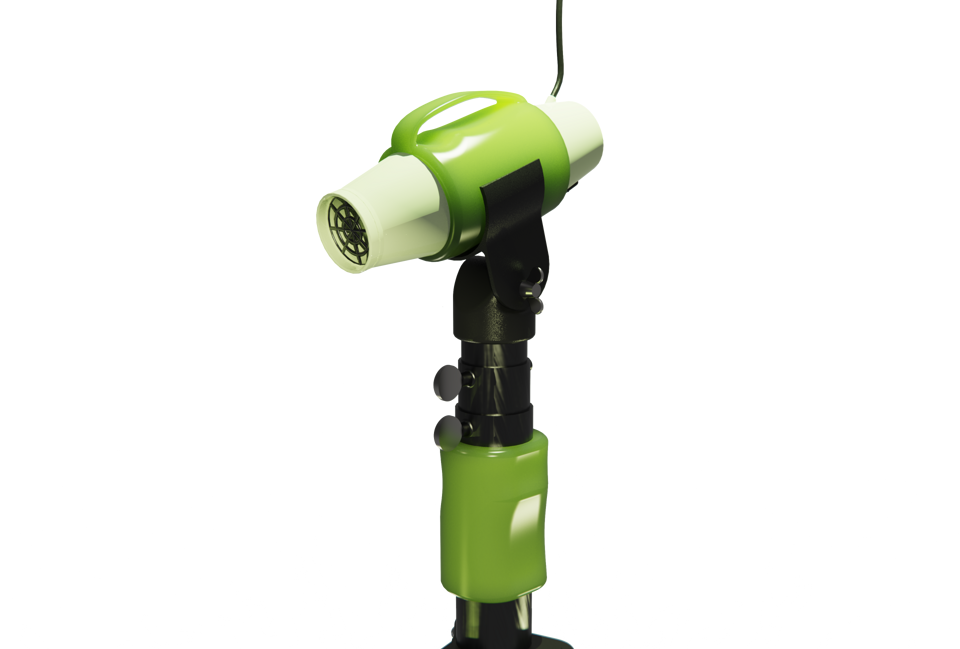
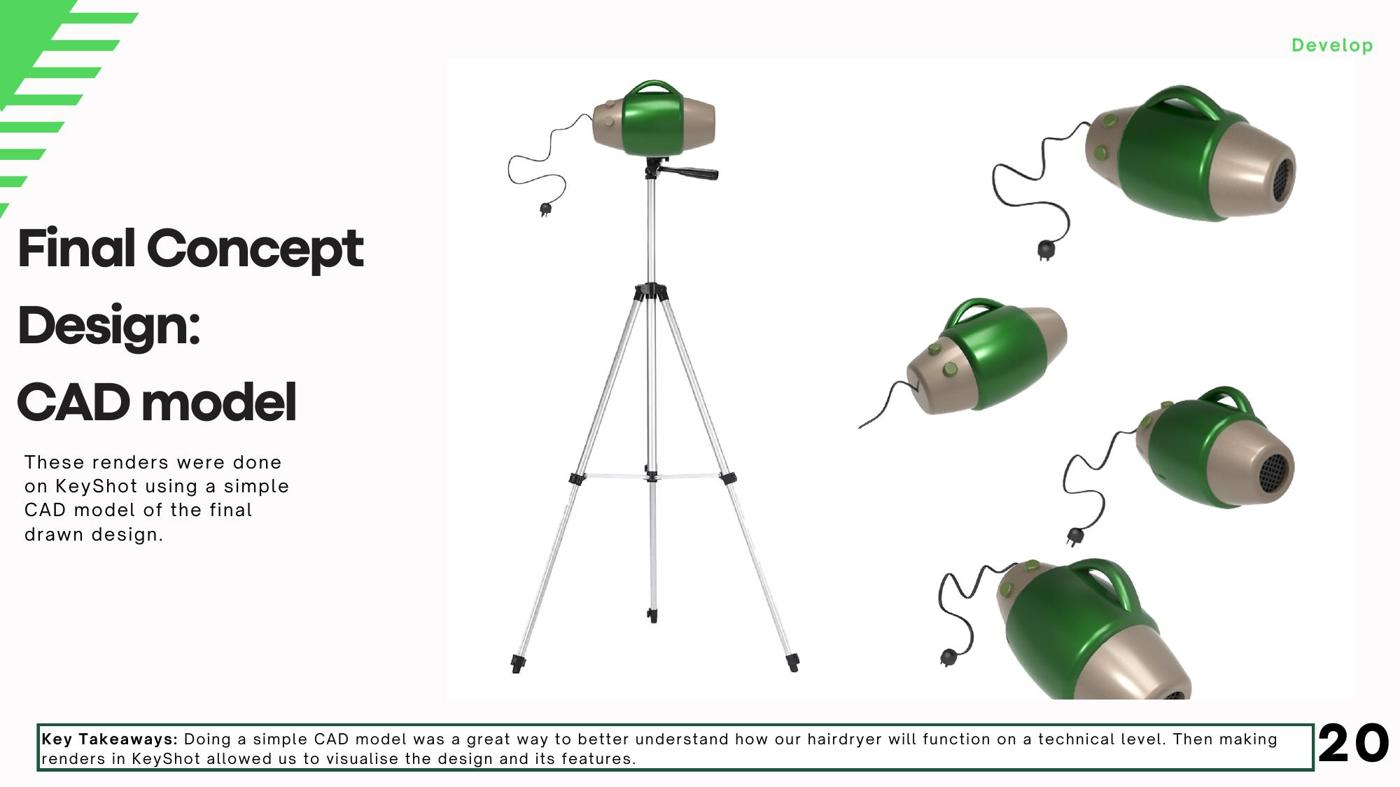
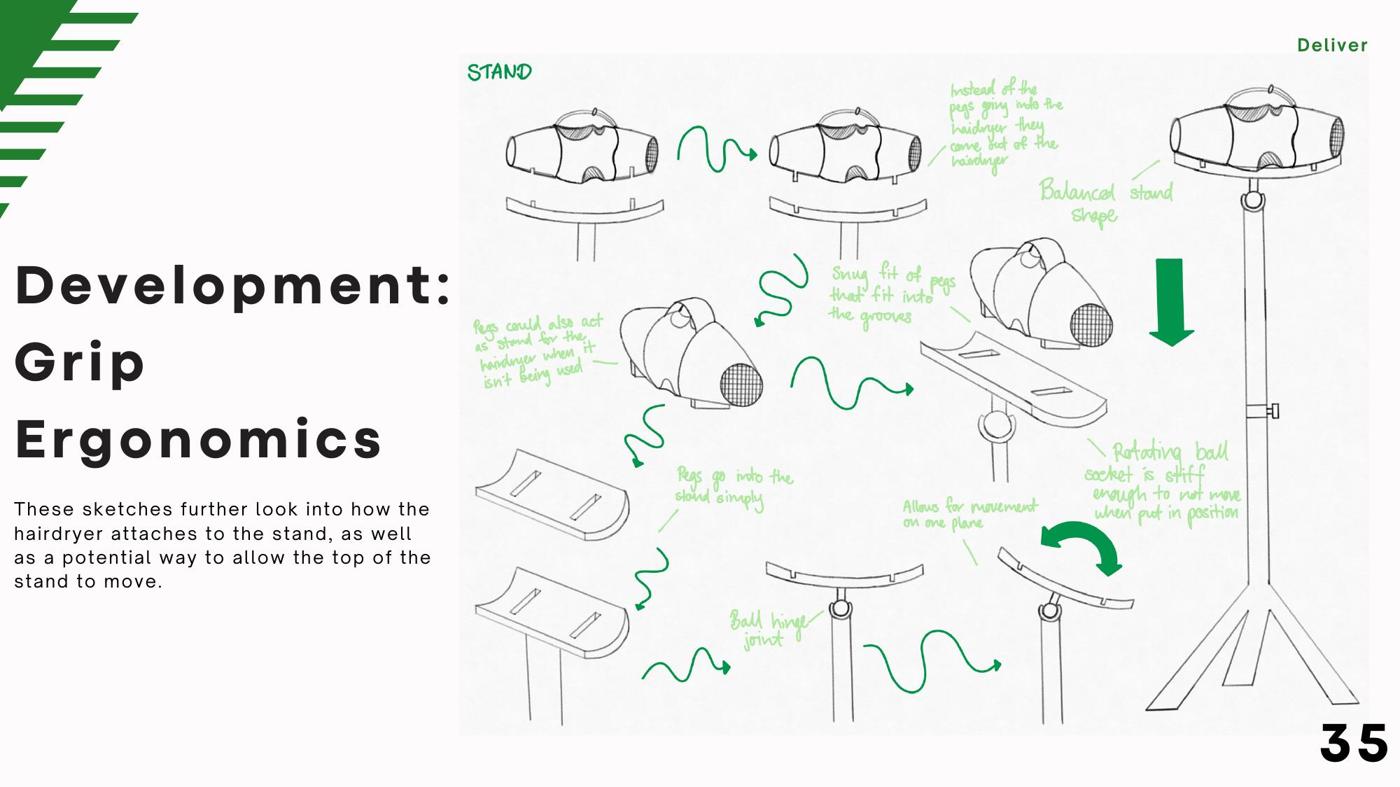
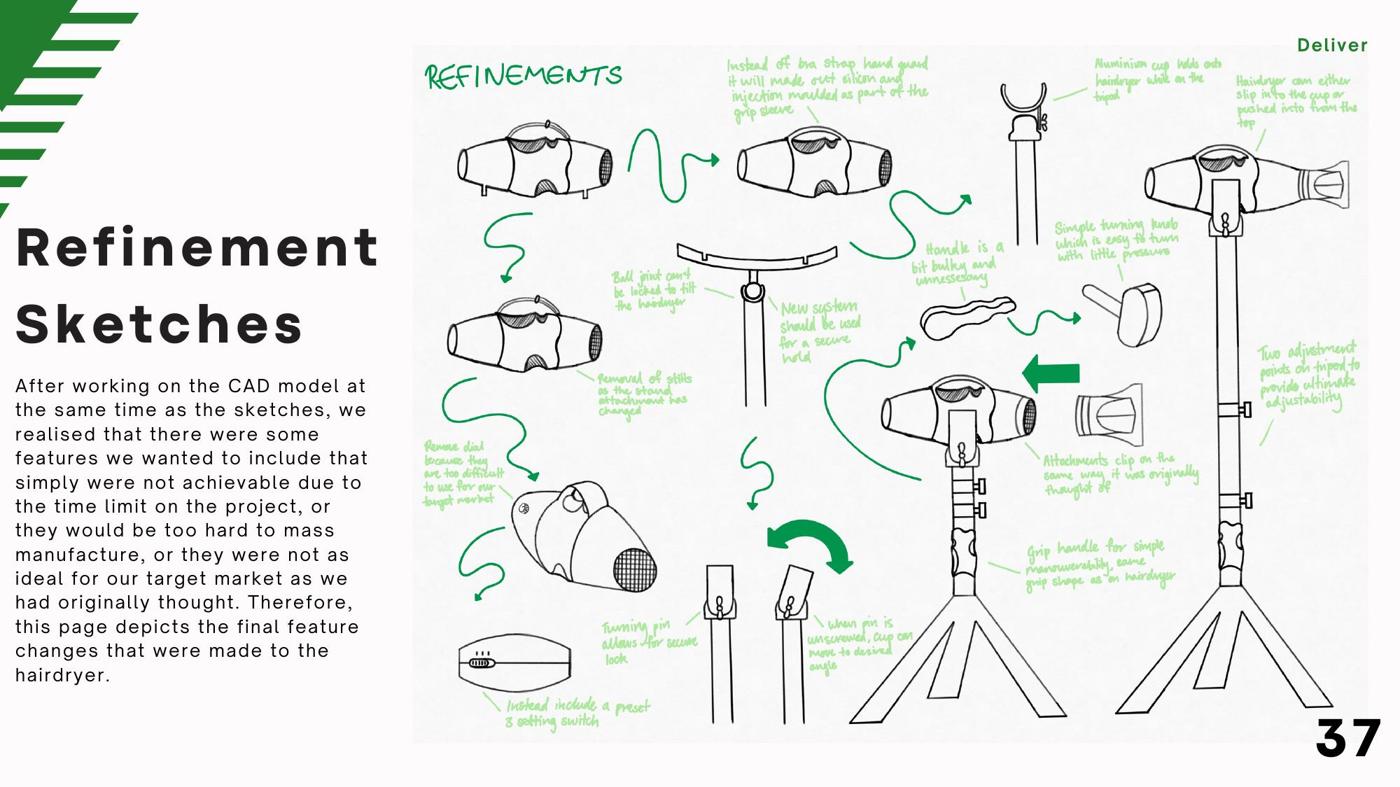
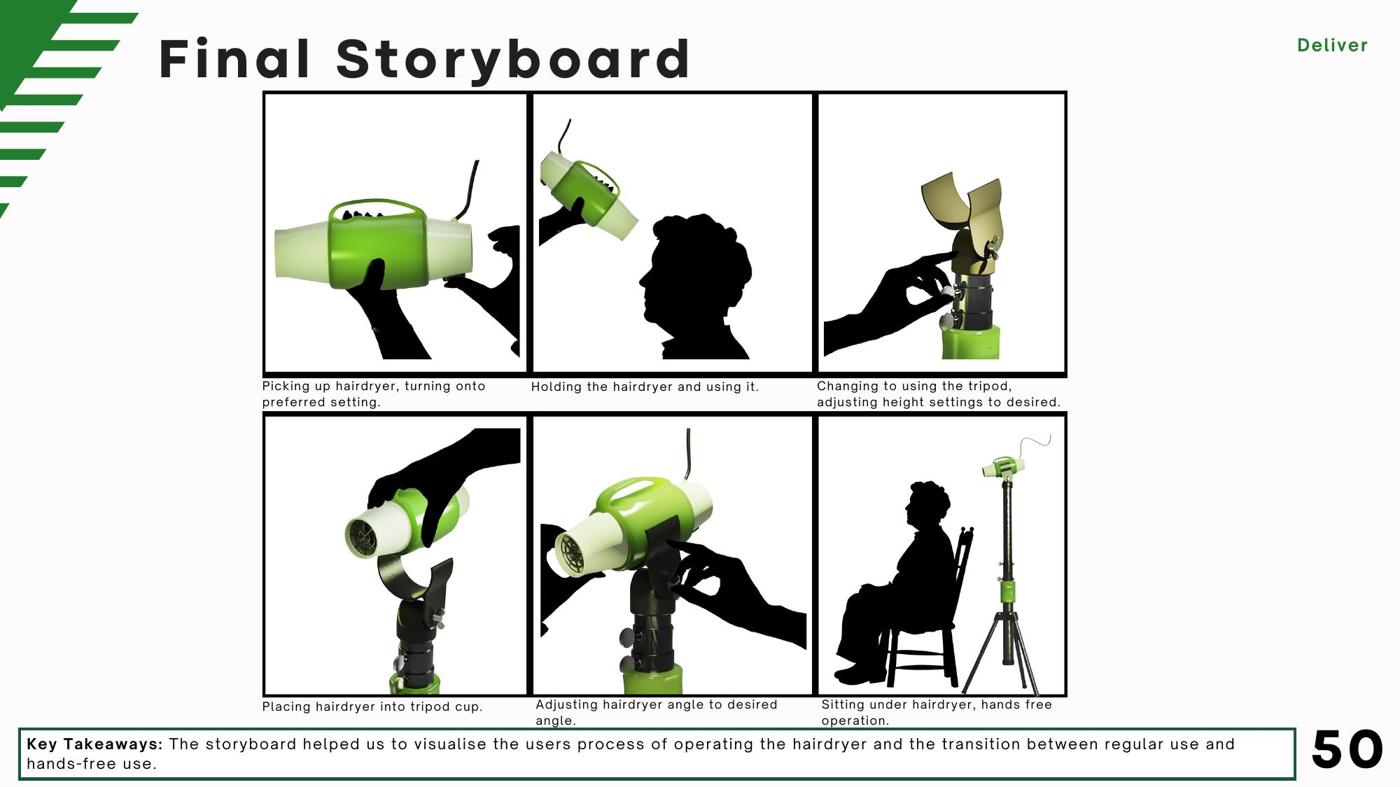
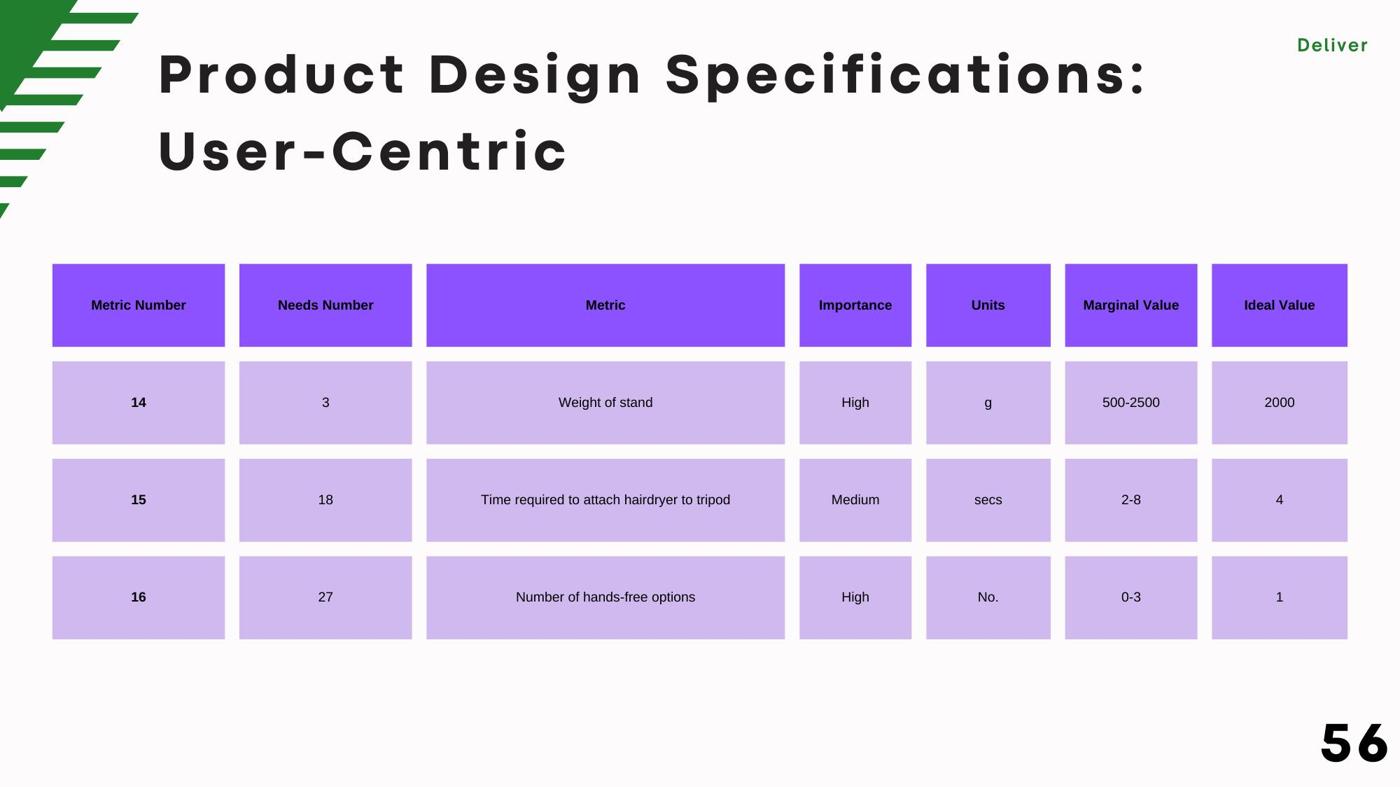
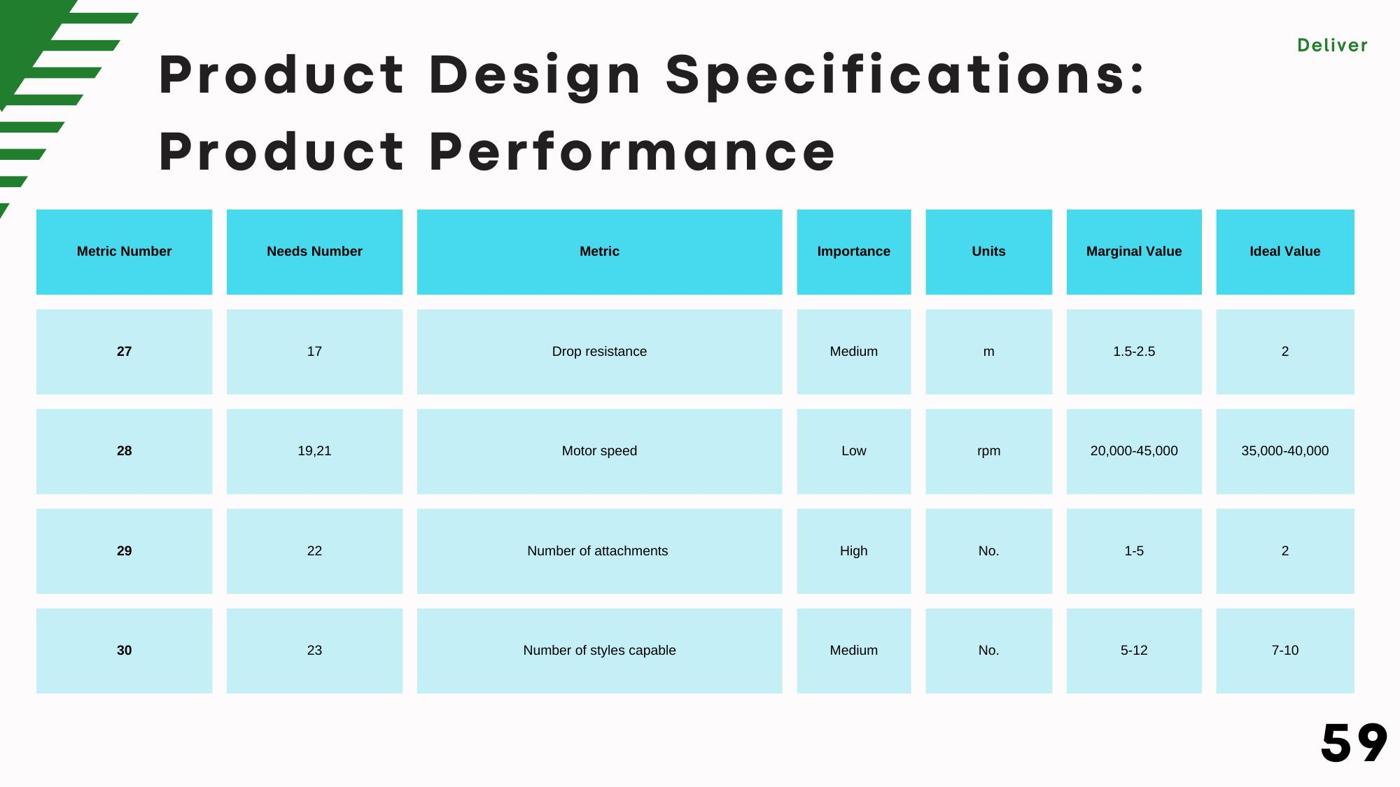
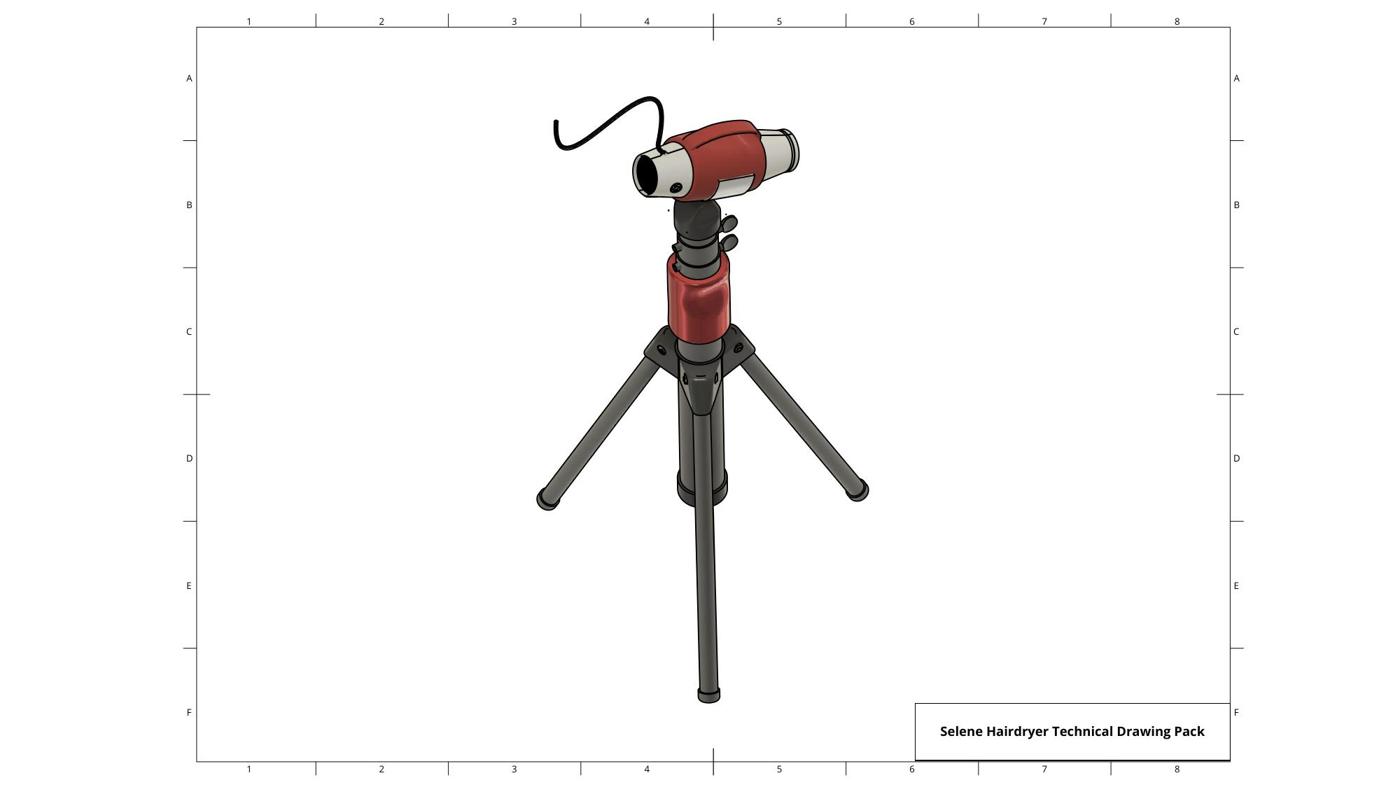
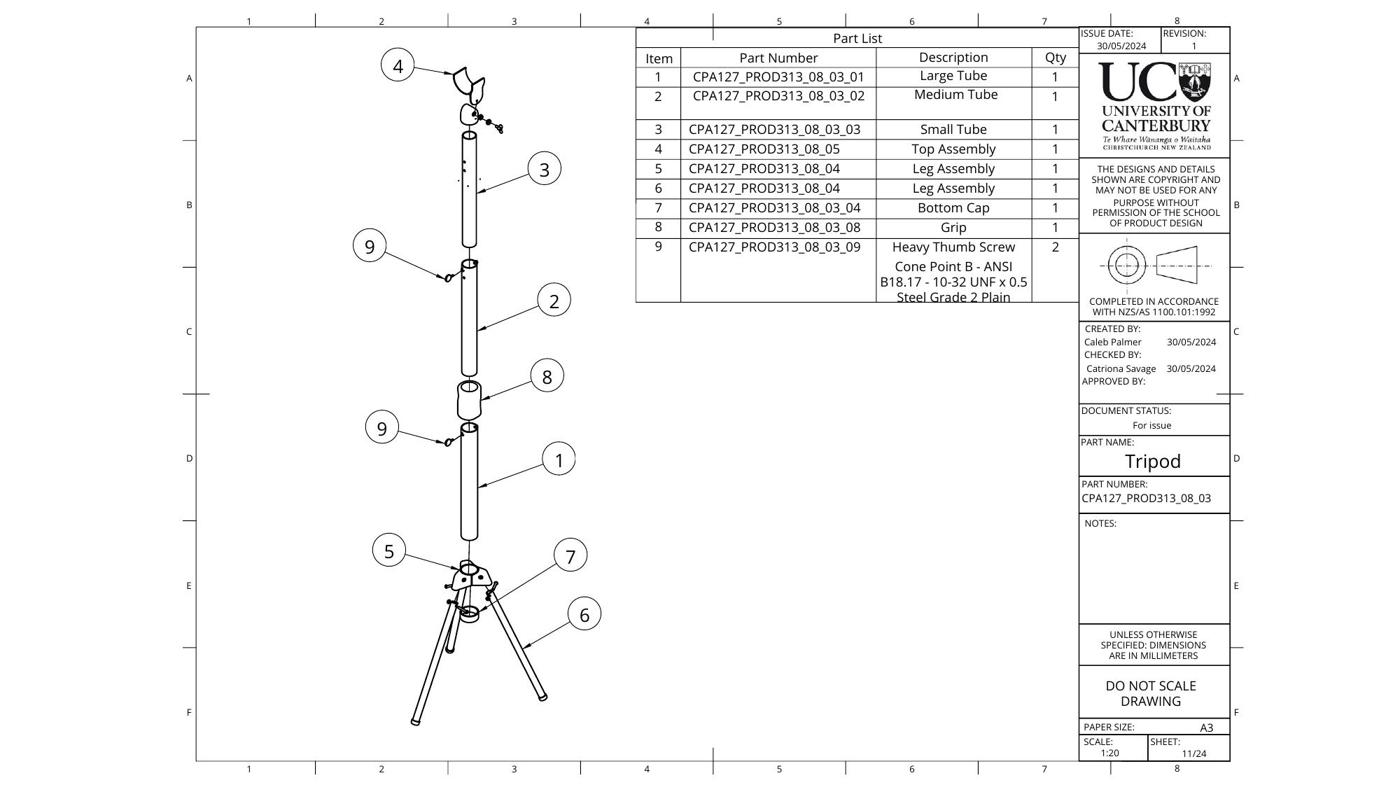
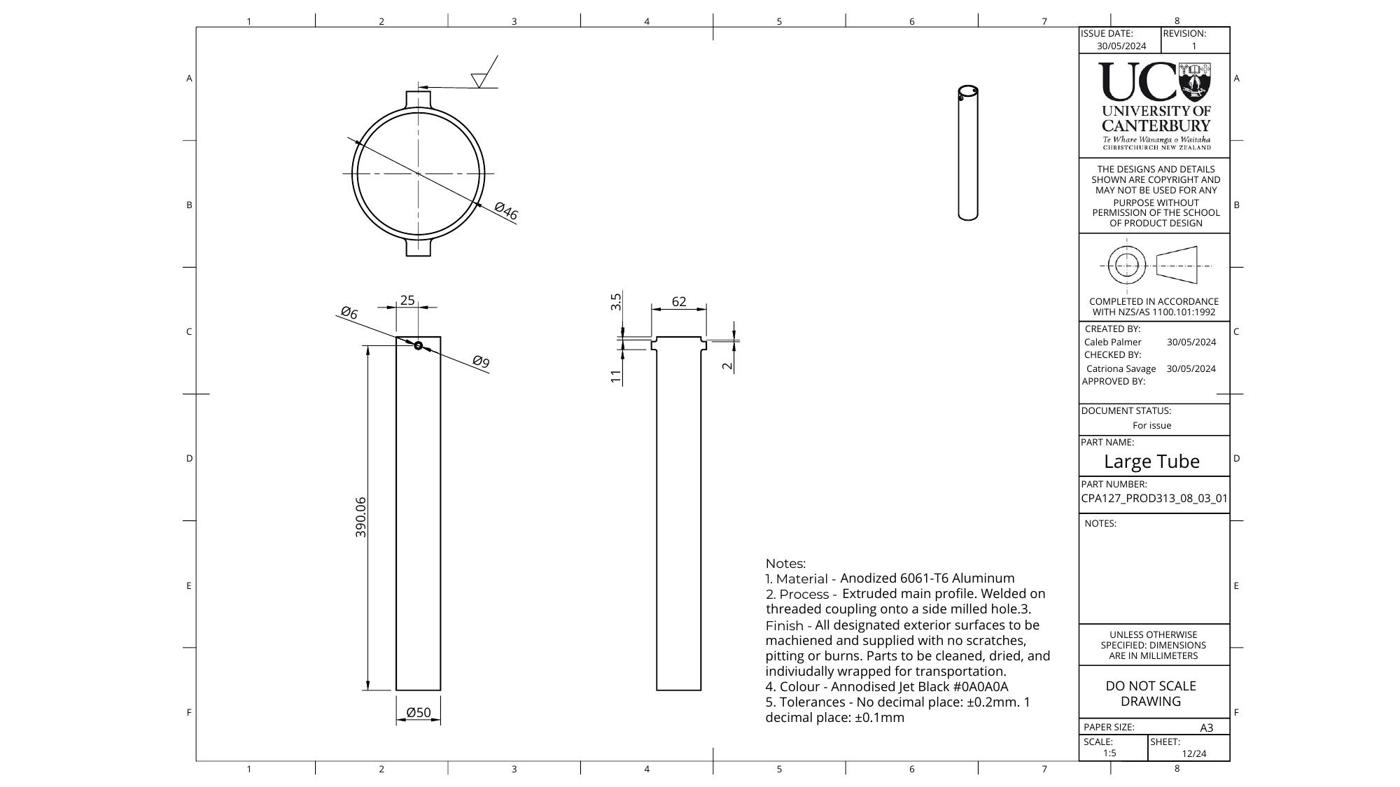
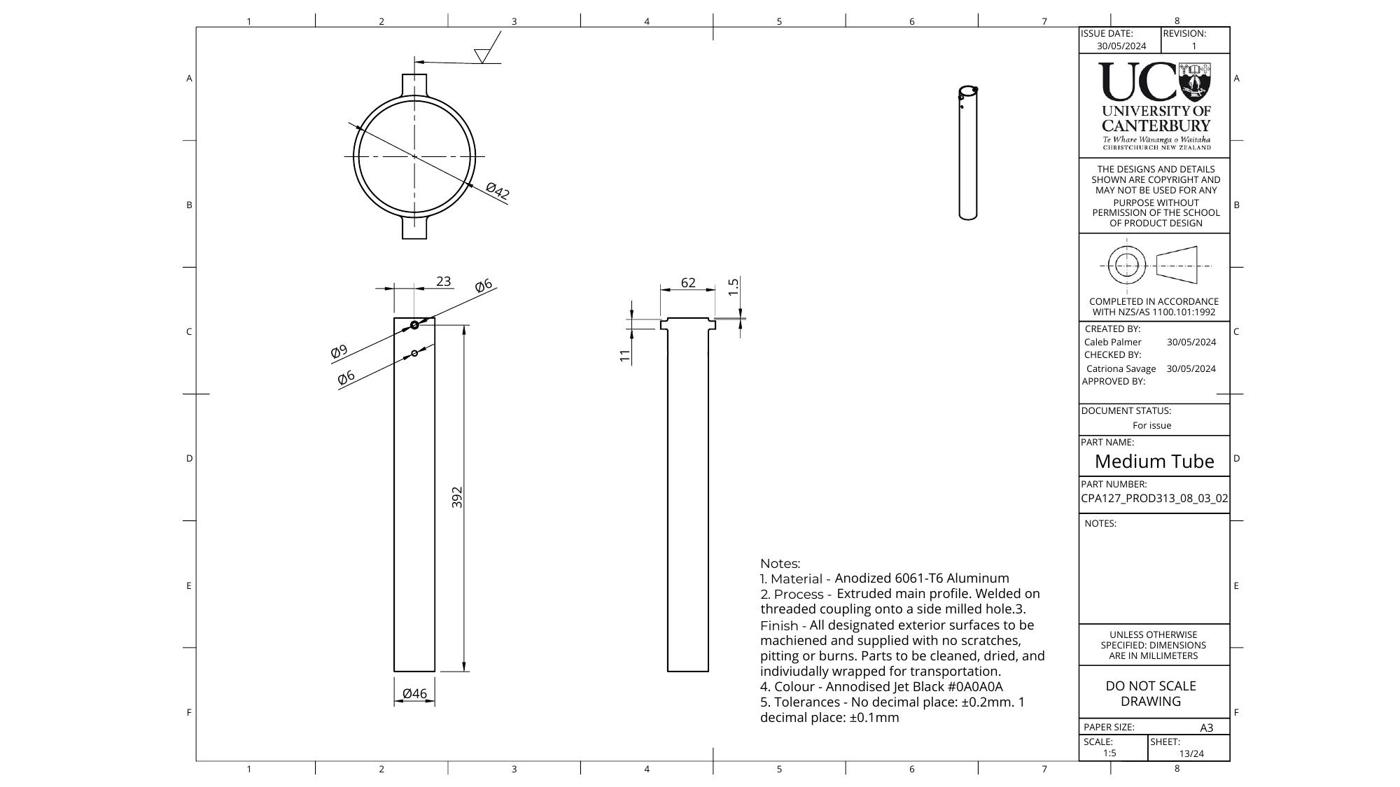
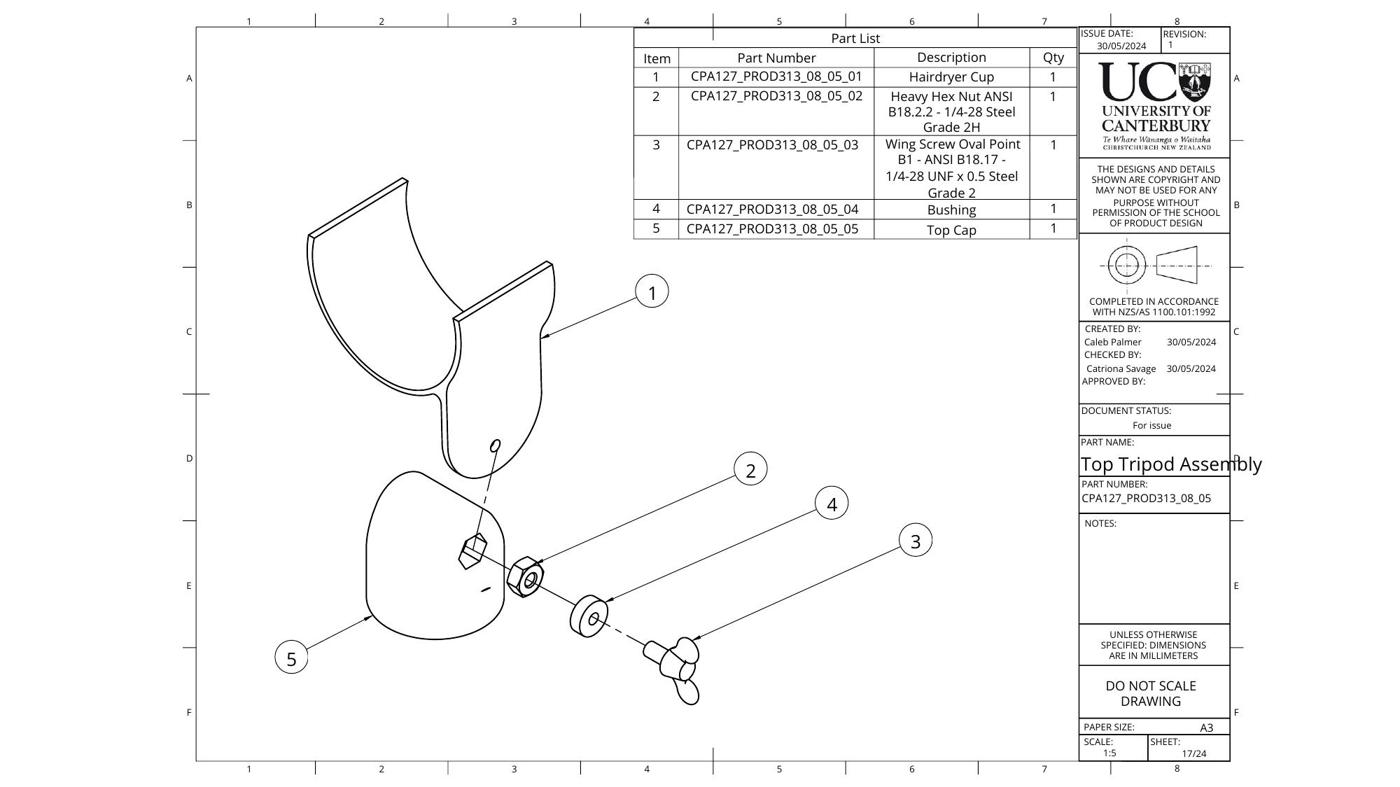
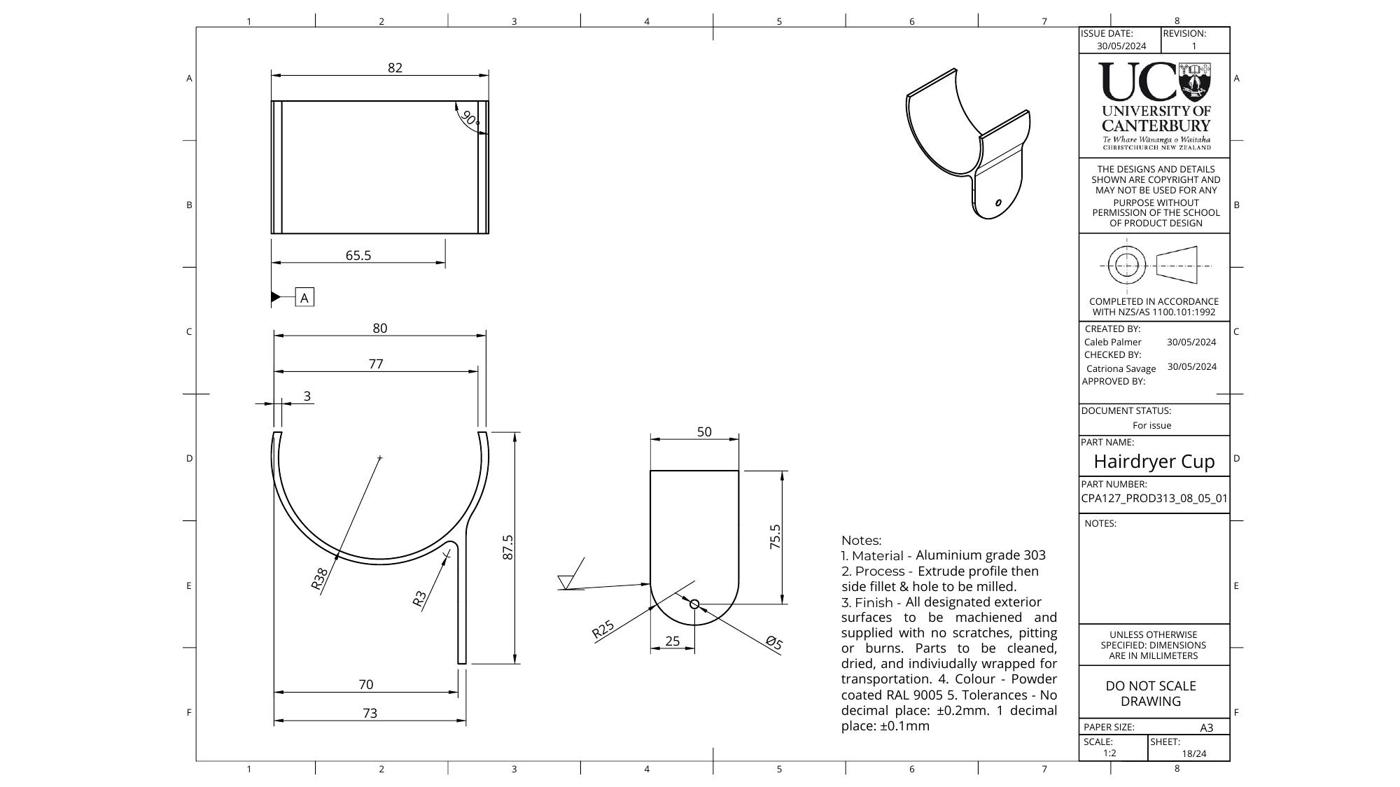
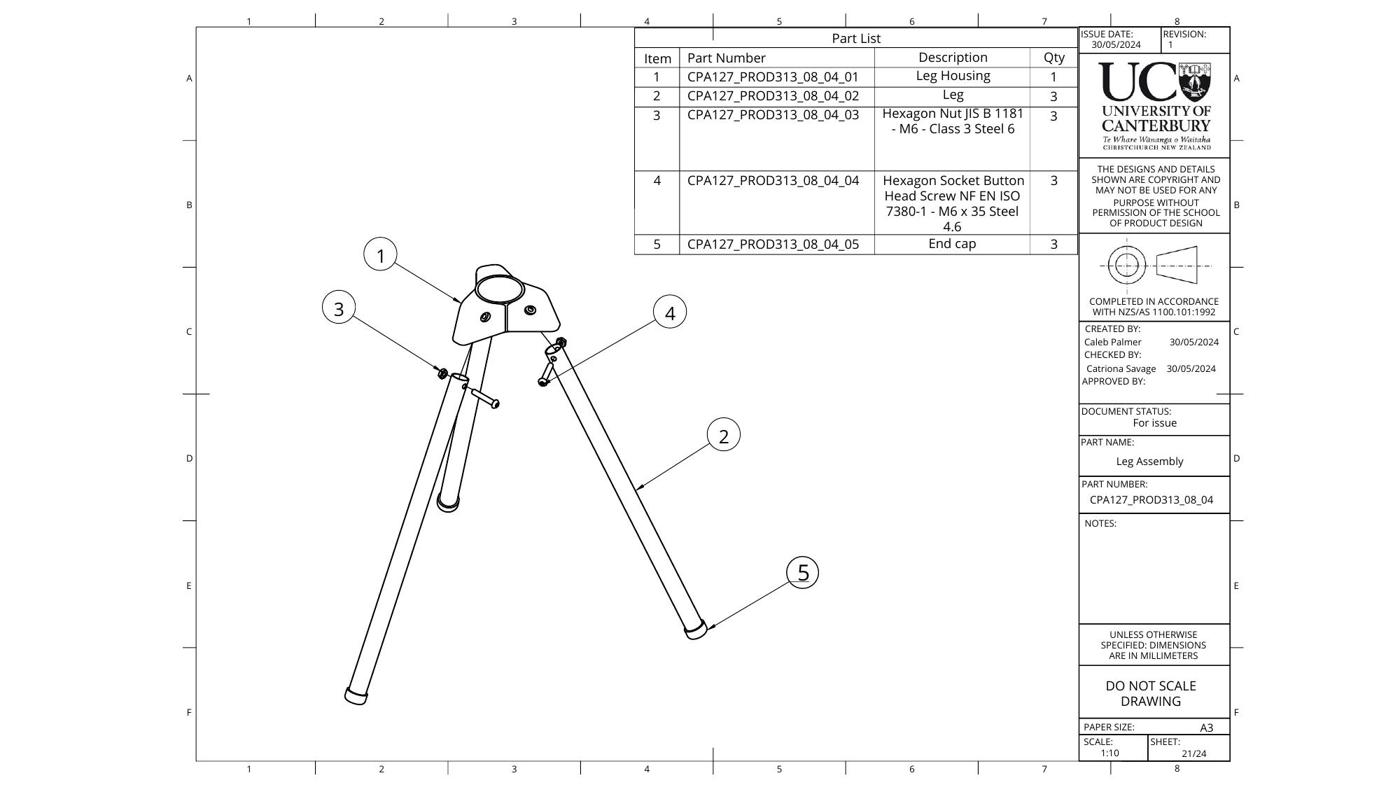
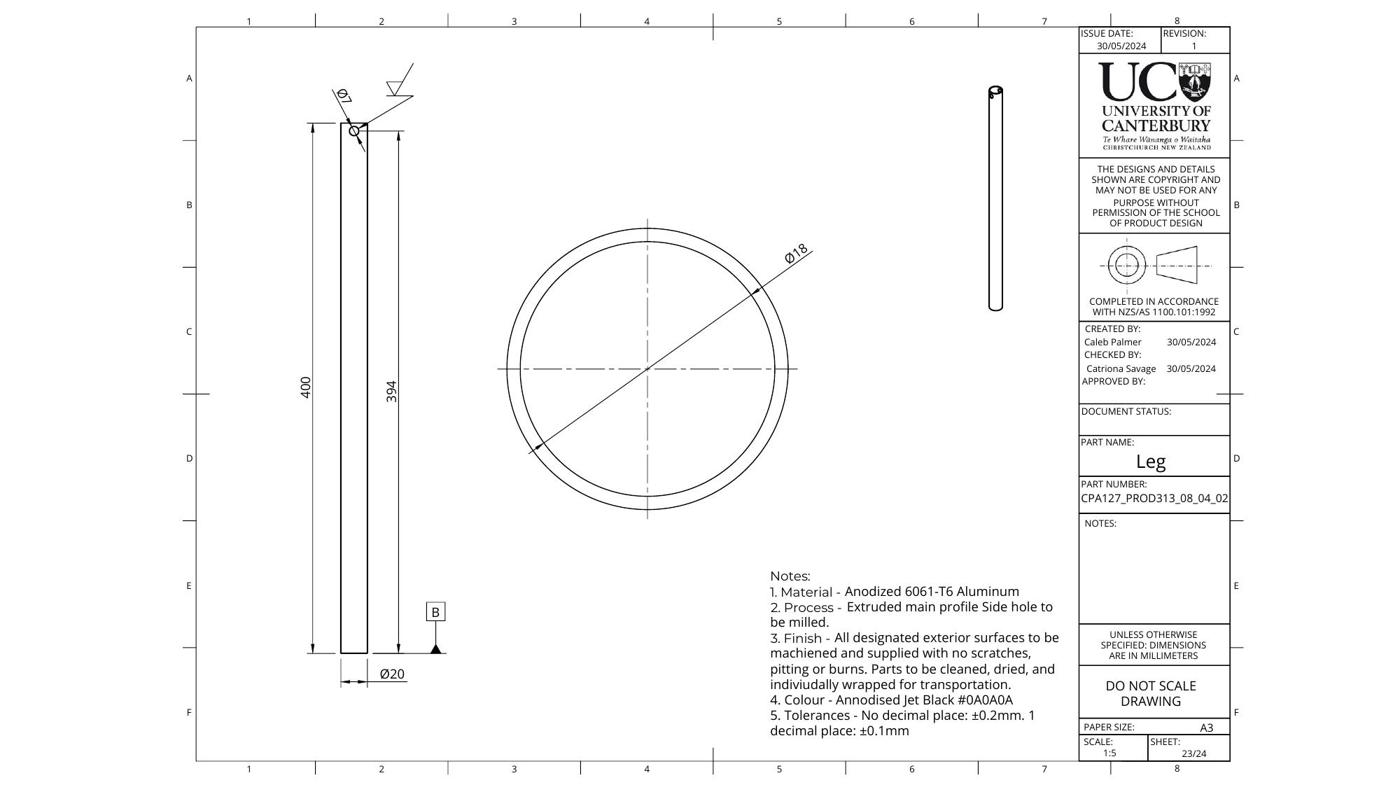
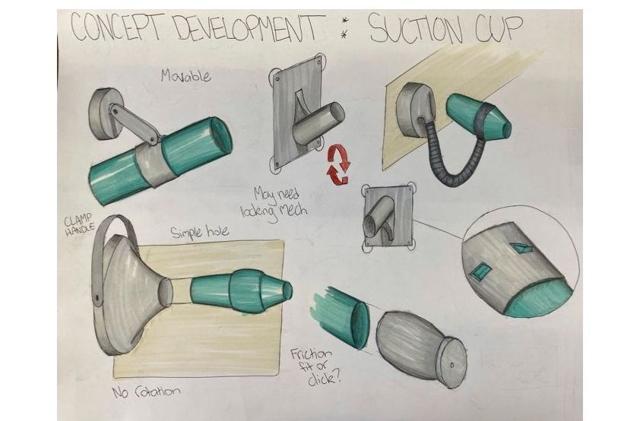
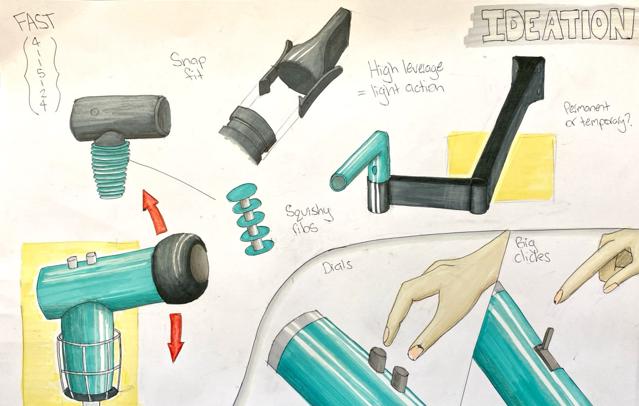
People that suffer from arthritis and carpal tunnel syndrome find it very painful to lift their arm above their heads for long periods of time. Because of this, included with Selene is a telescopic tripod that users can set up anywhere, and clip the hair dryer into for hands free use. This solution has built-in ergonomics, a lightweight design, and oversized fasteners for easier purchase. It can be folded down to as little as 400mm, and extend all the way up to 1600mm.
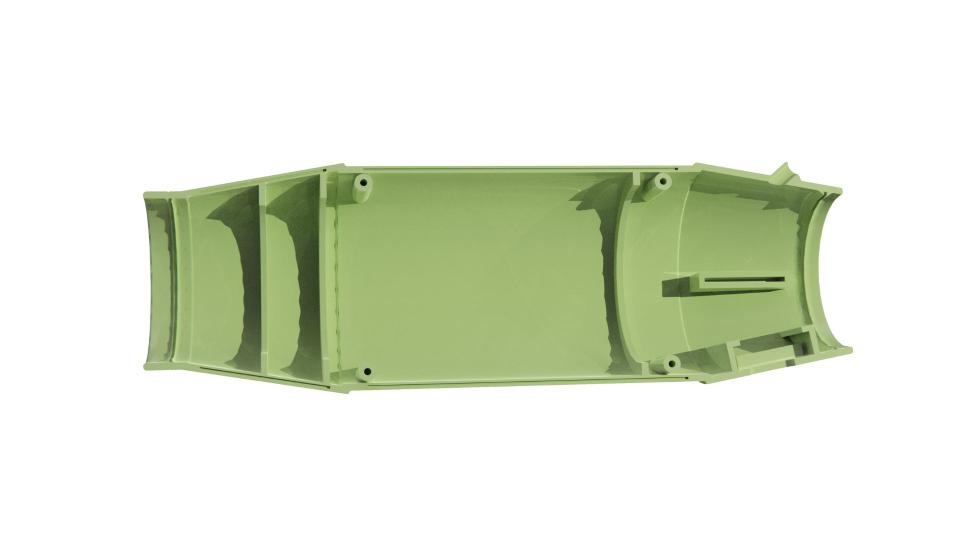
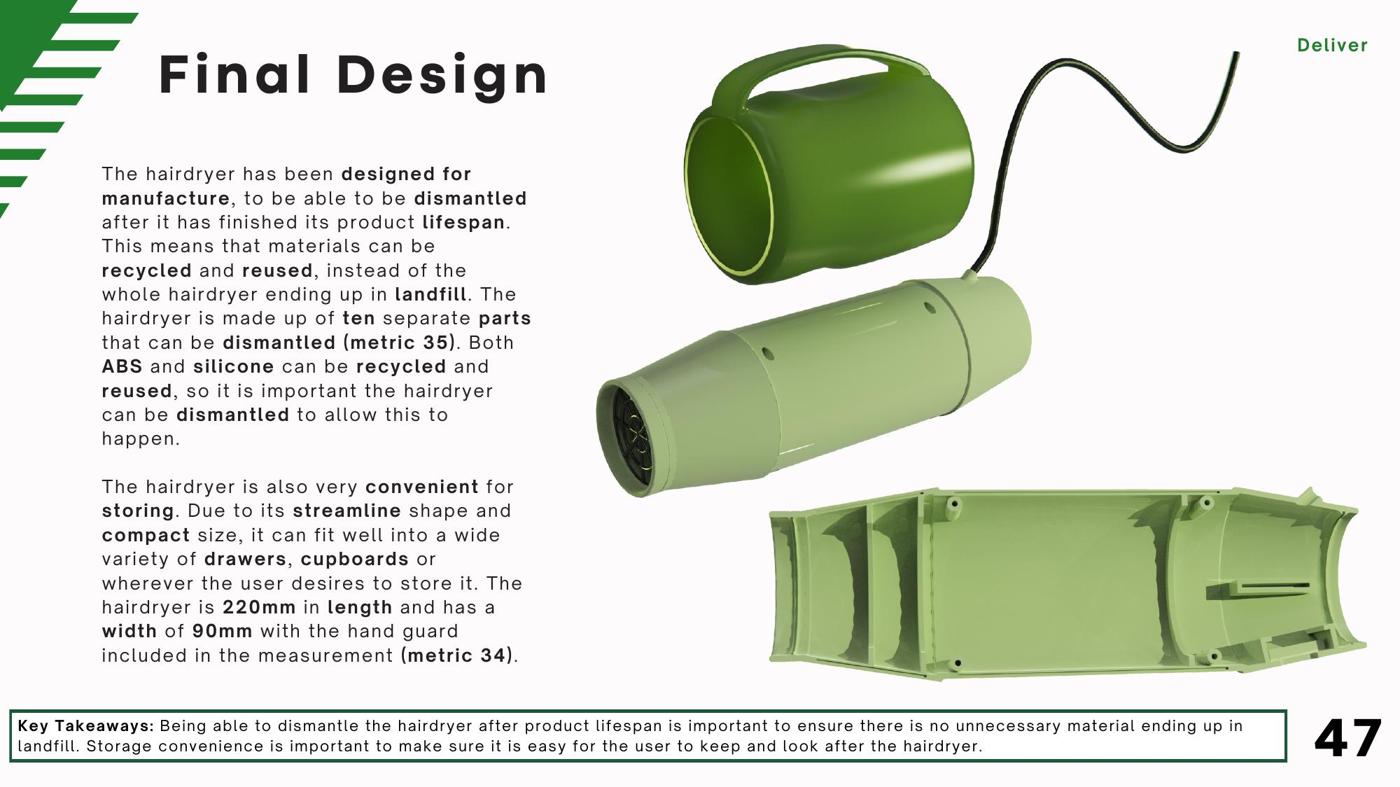
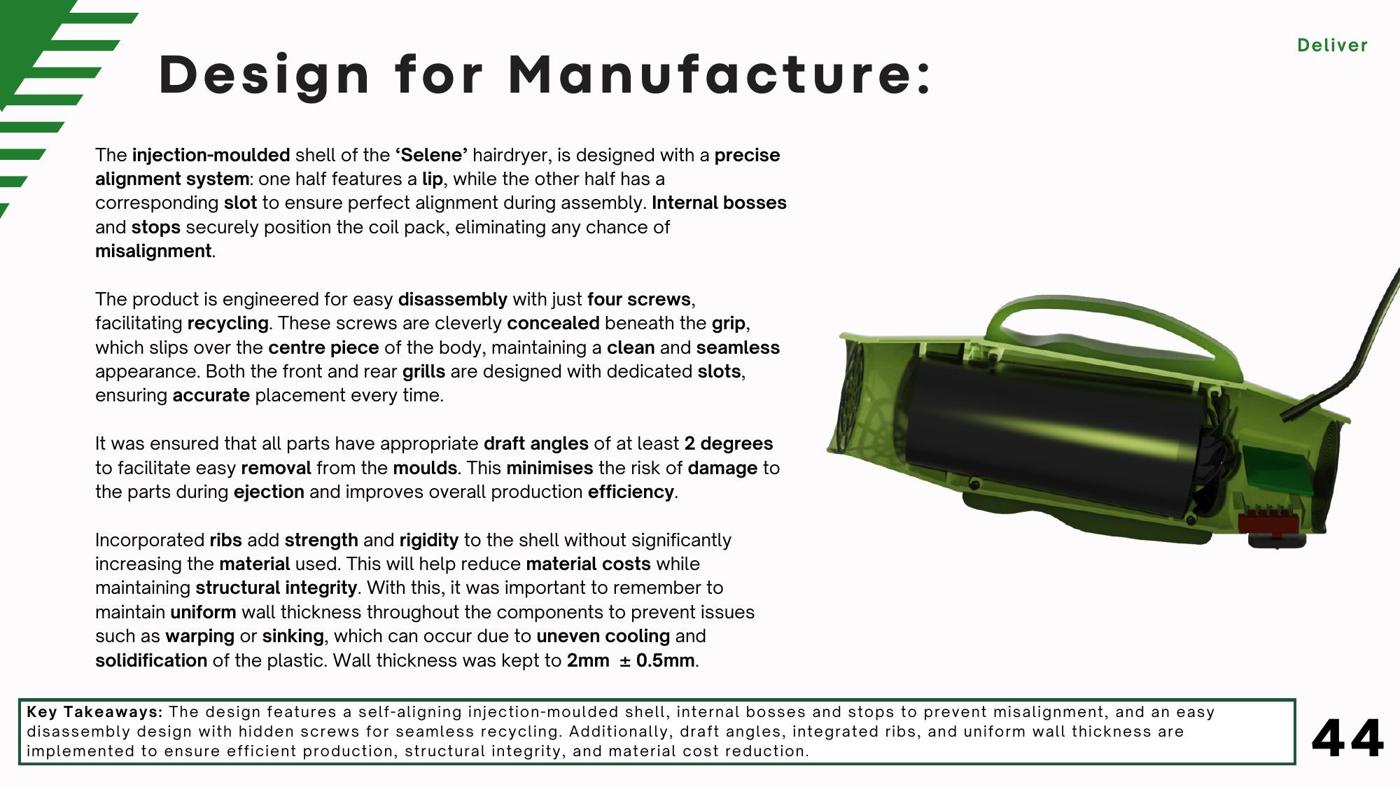
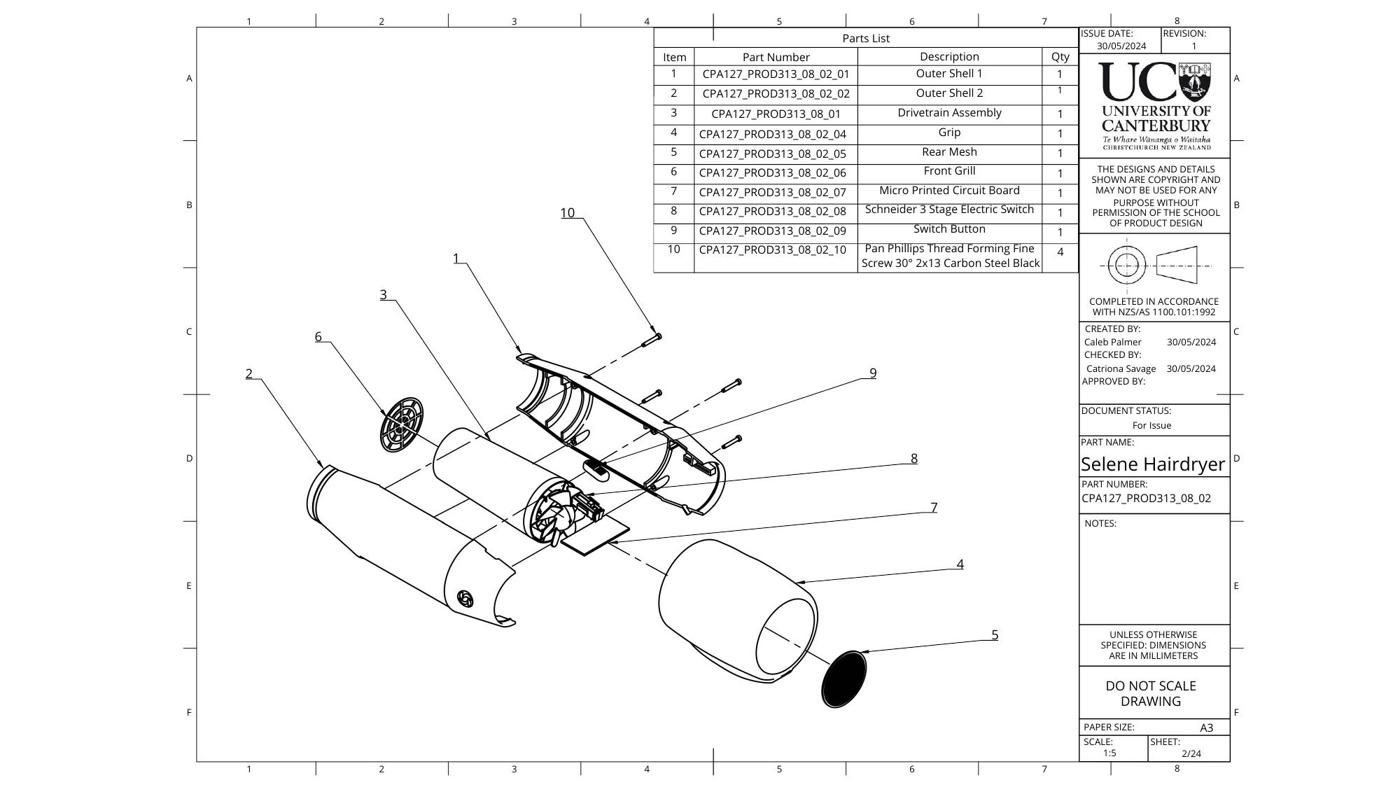
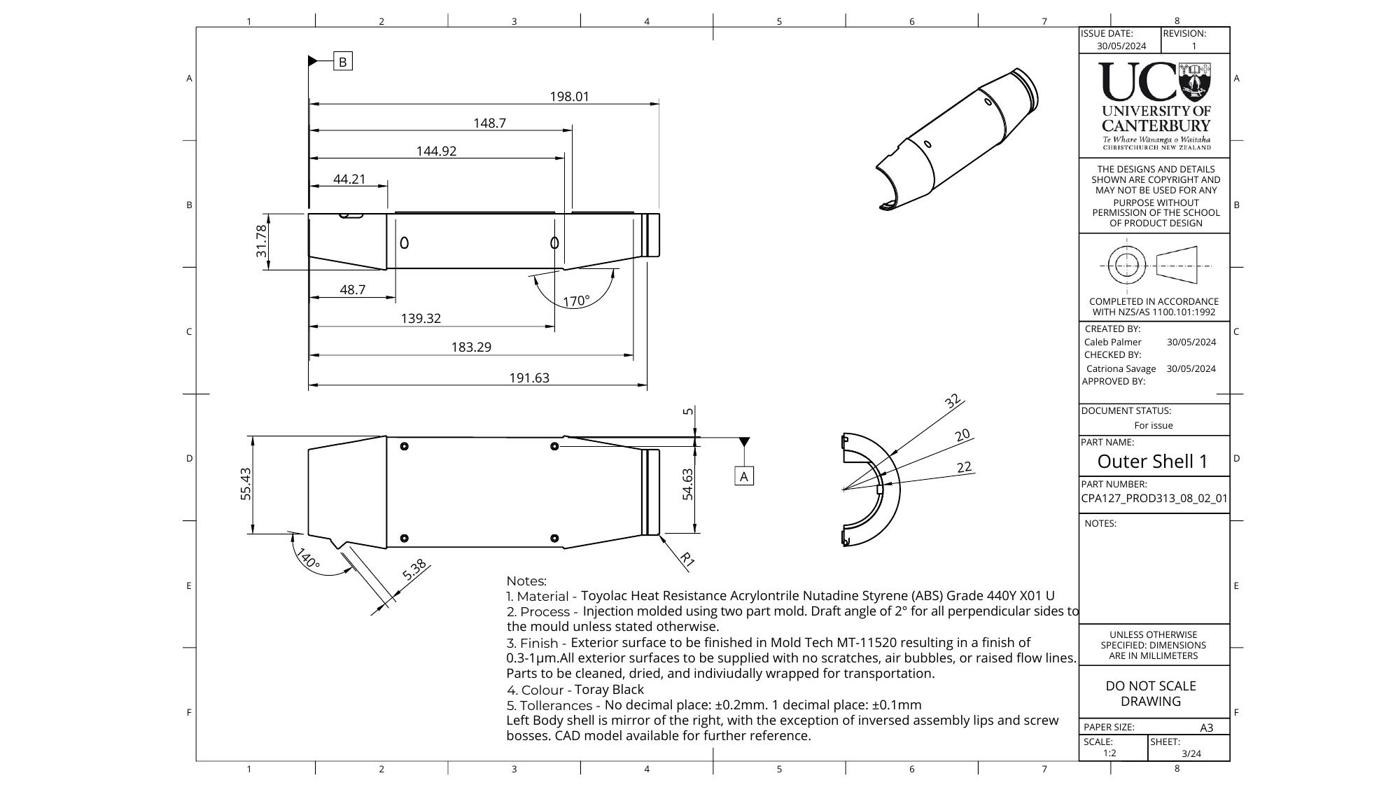
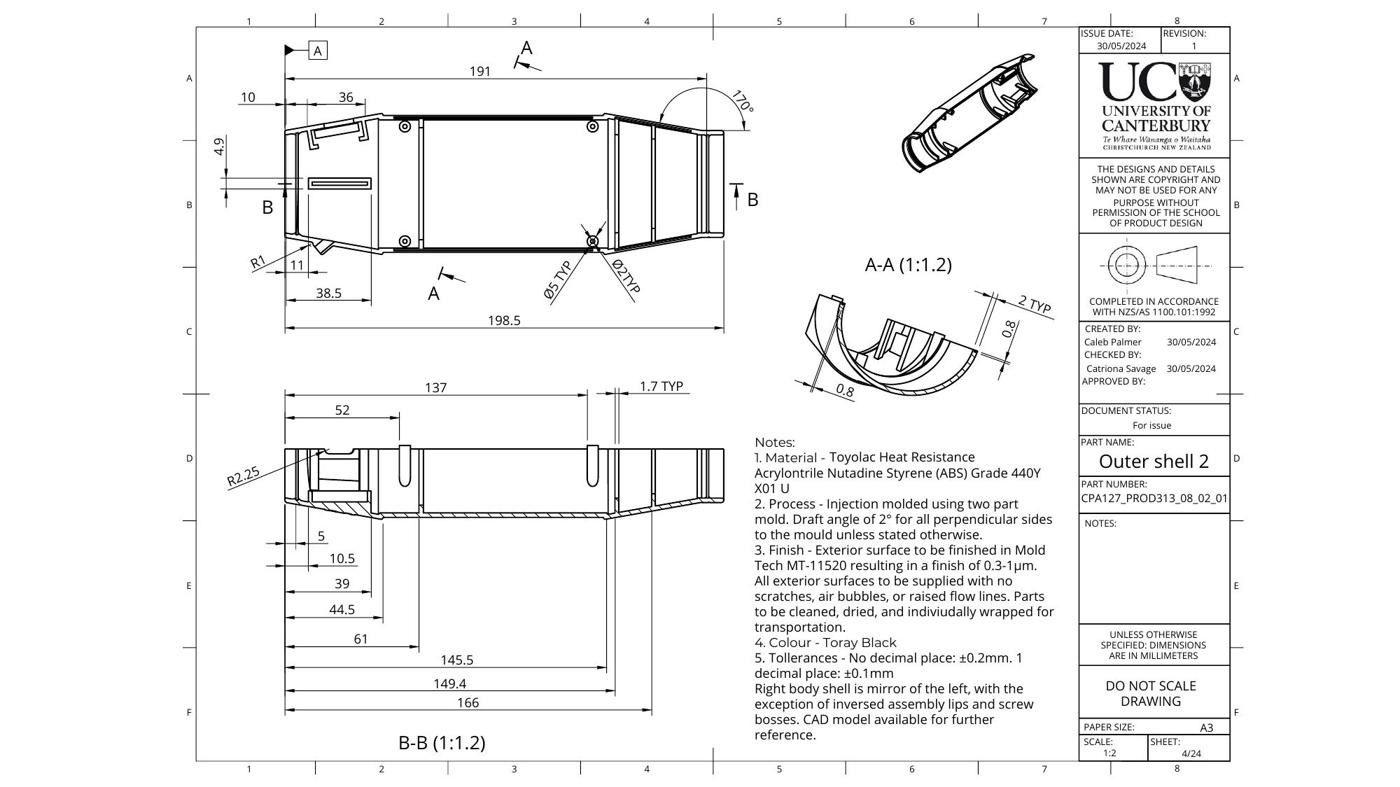
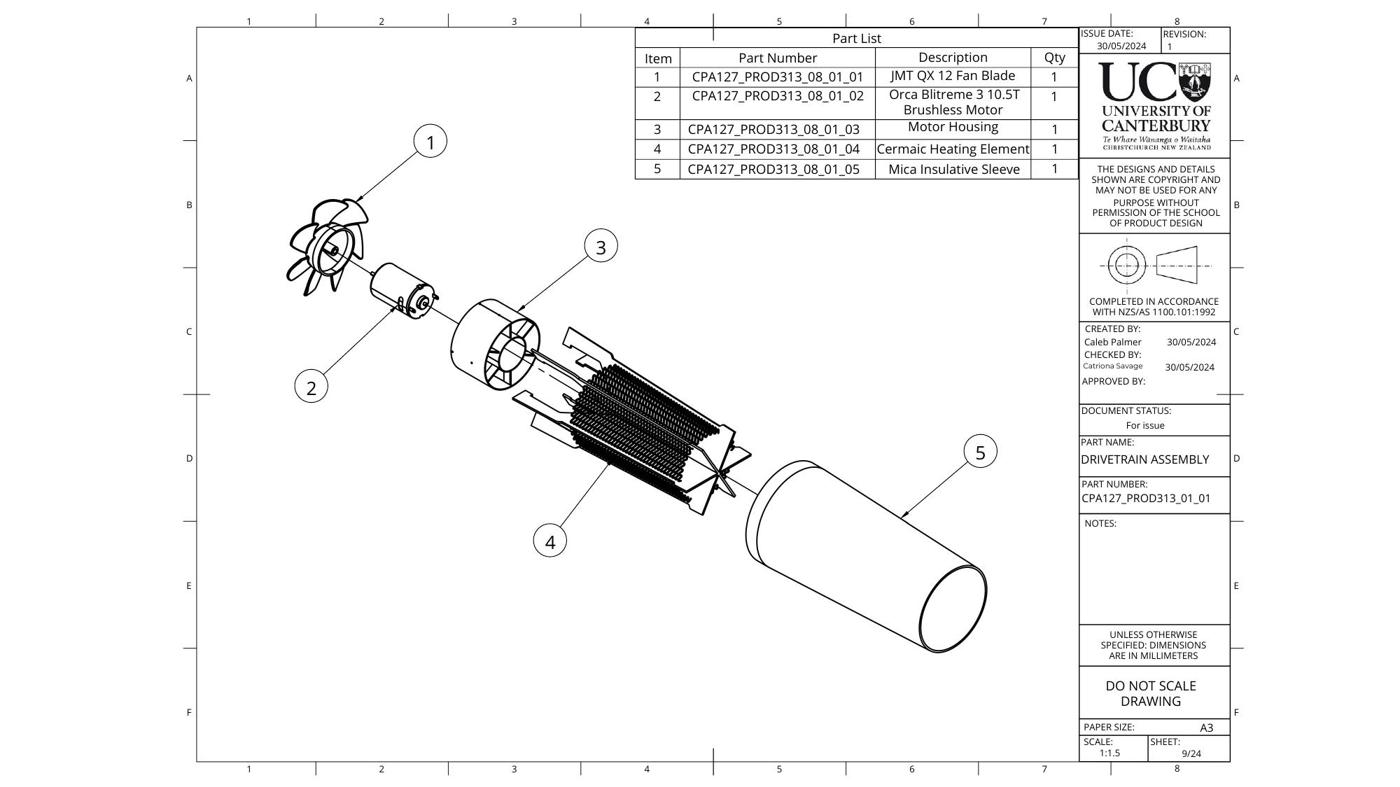
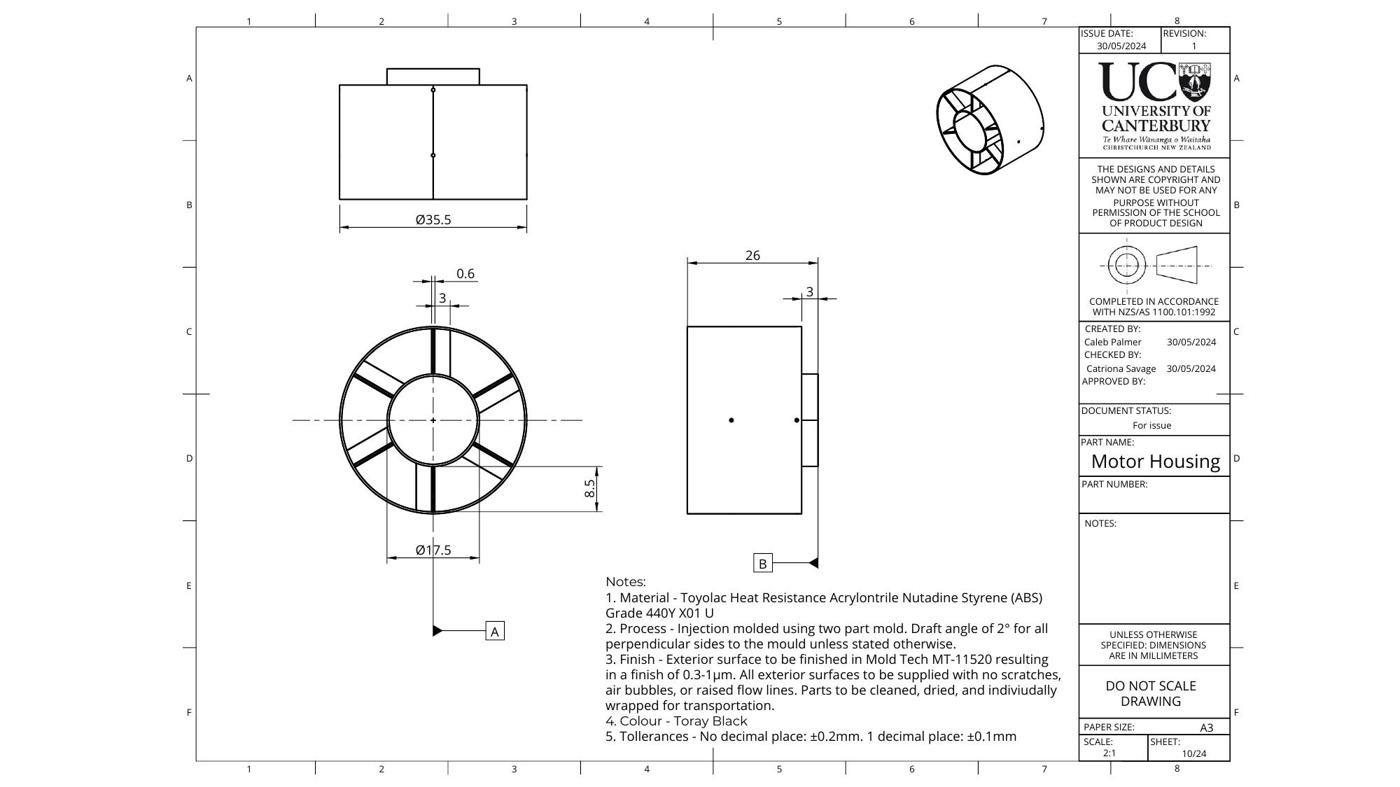
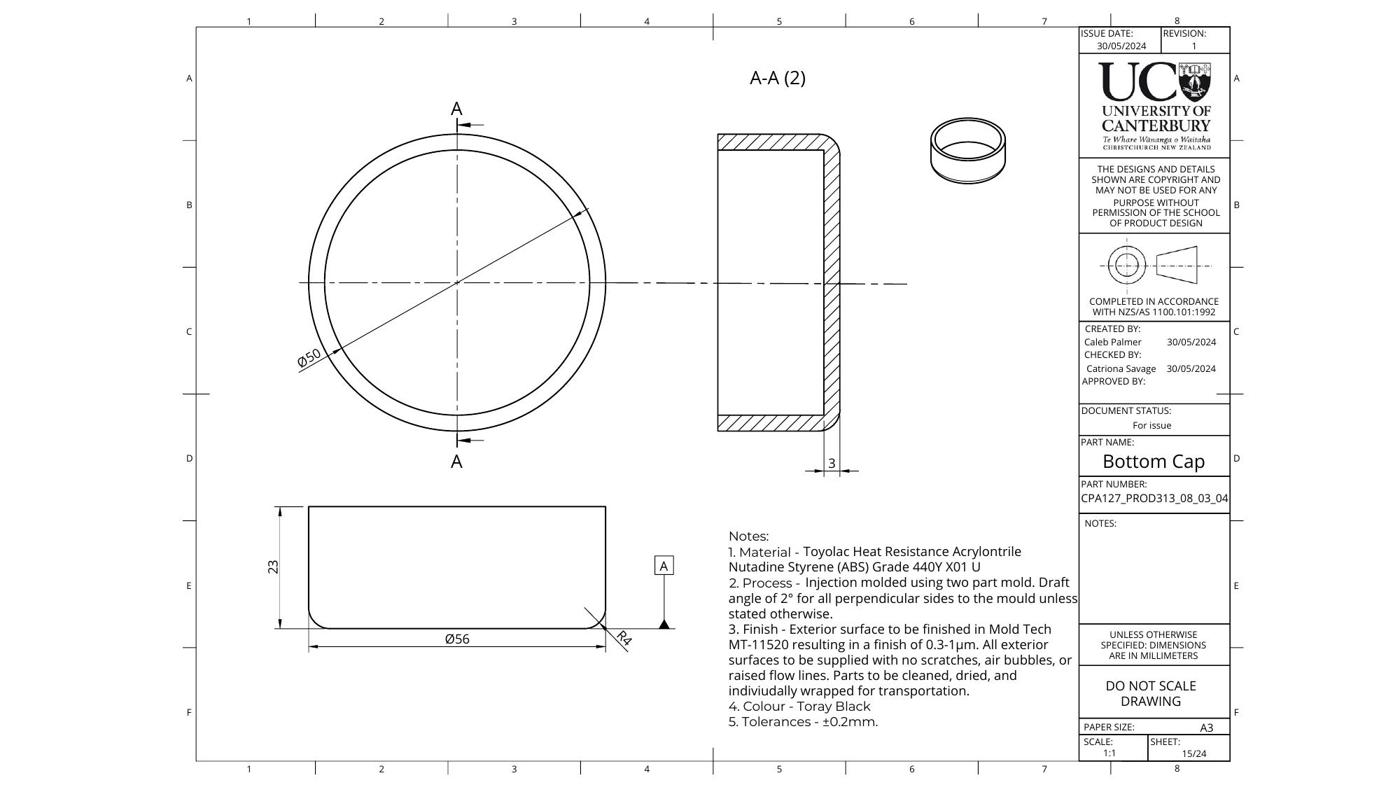
With this project we had to treat the CAD design as if it were to be put into production. This meant we had to consider design for manufacturing and assembly. The injection-moulded shell of Selene is designed with a precise alignment system: one half features a lip, while the other half has a corresponding slot to ensure perfect alignment during assembly. Internal bosses and stops securely position the coil pack and motor, eliminating any chance of misalignment.
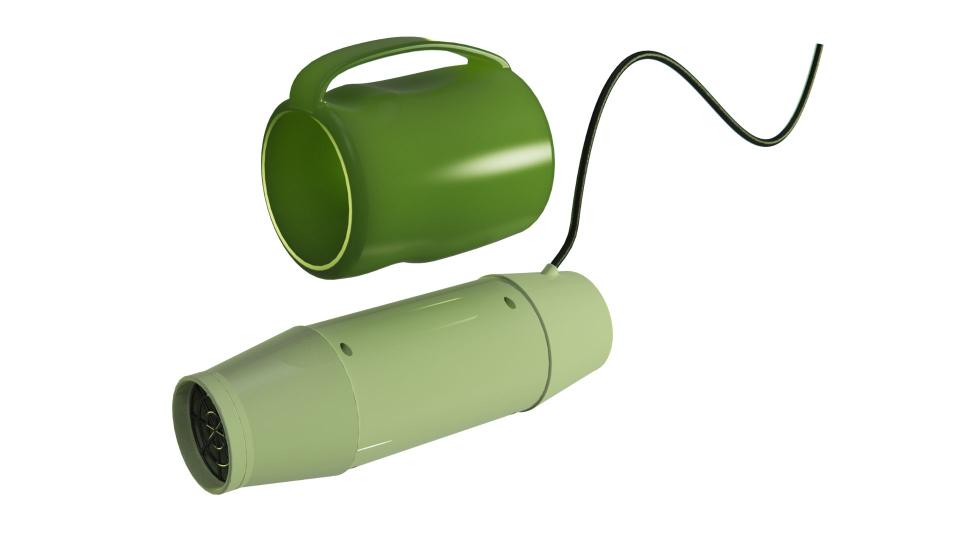
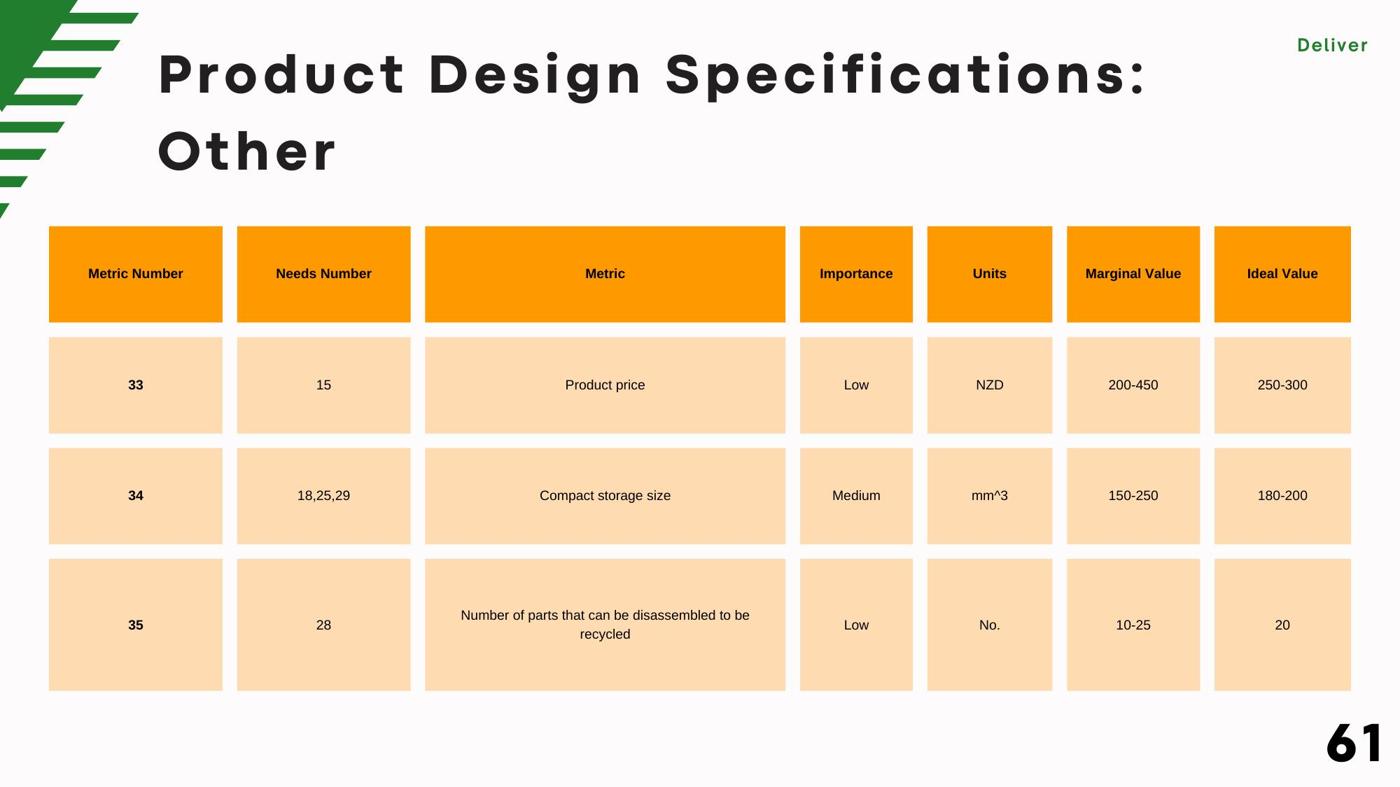
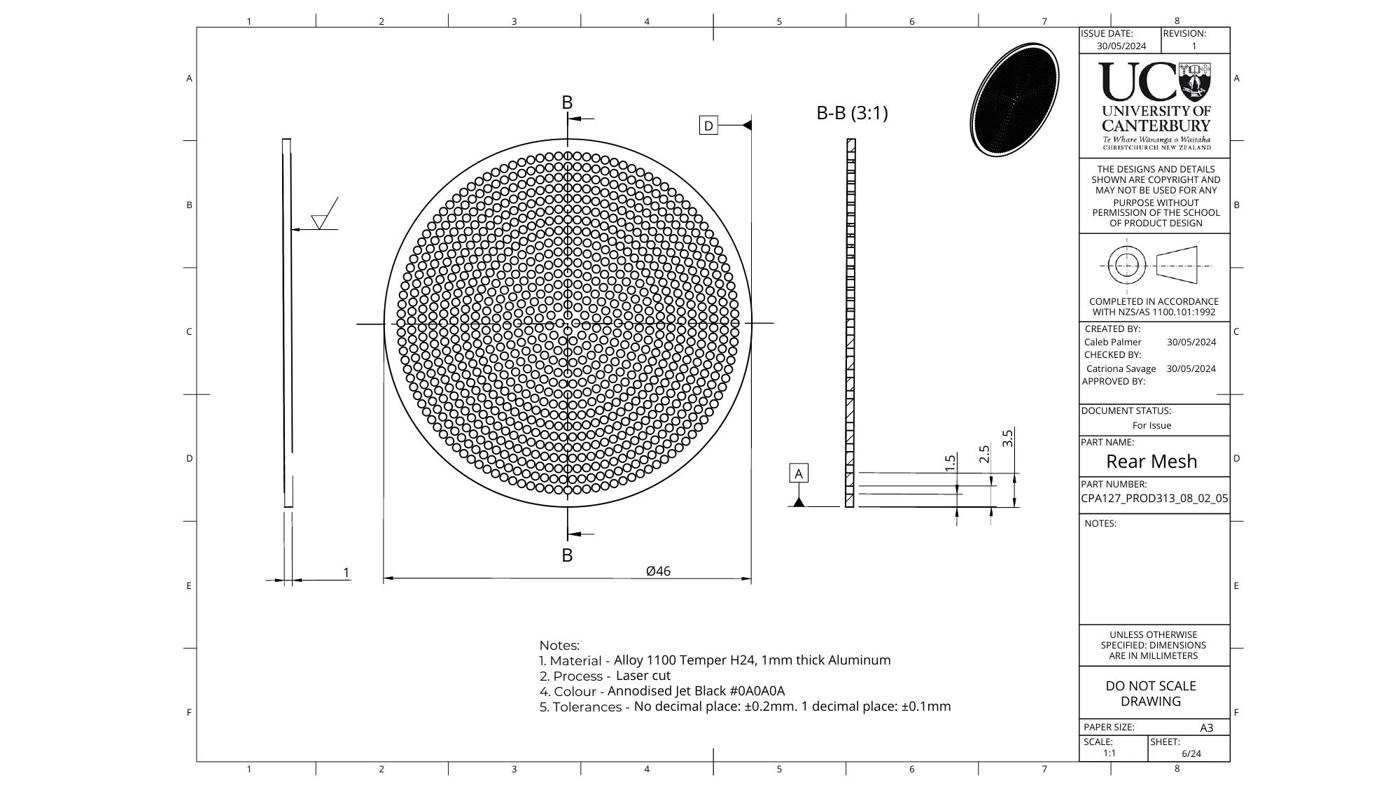
The product is engineered for easy disassembly with just four screws, facilitating recycling. These screws are cleverly concealed beneath the grip, which slips over the centre piece of the body, maintaining a clean and seamless appearance. Both the front and rear grills are designed with dedicated slots, ensuring accurate placement every time.
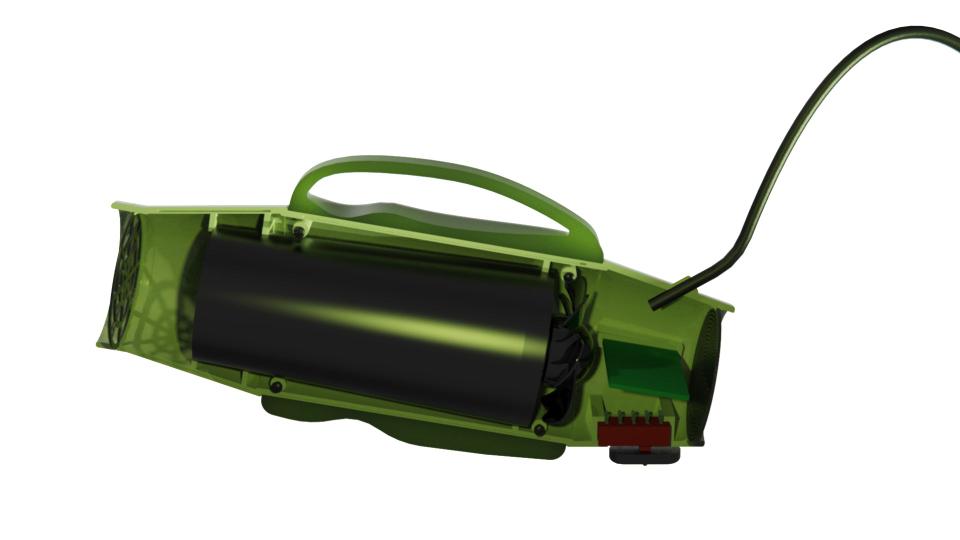
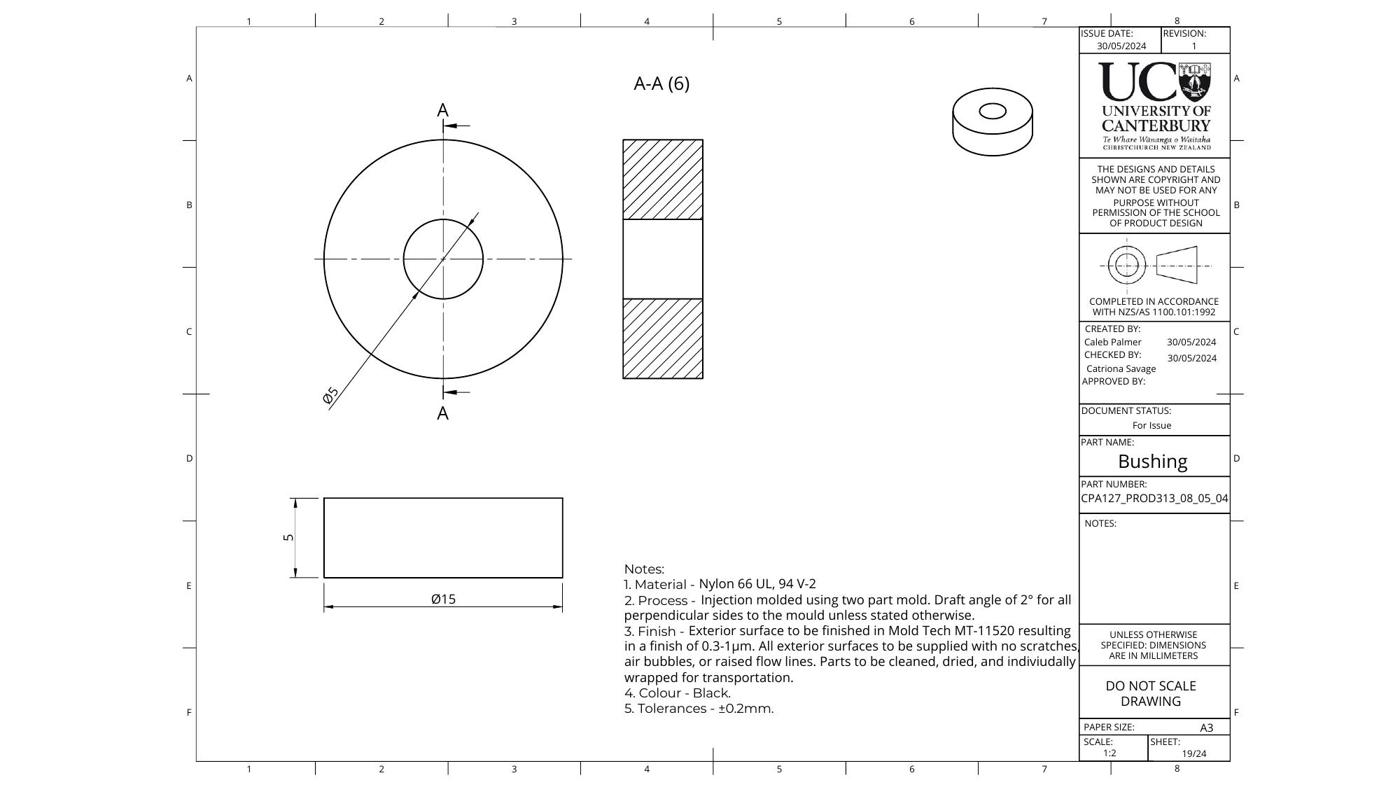
It was ensured that all parts have appropriate draft angles of at least 2 degrees to facilitate easy removal from the moulds. This minimises the risk of damage to the parts during ejection and improves overall production efficiency.
Incorporated ribs add strength and rigidity to the shell without significantly increasing the material used. This will help reduce material costs while maintaining structural integrity. With this, it was important to remember to maintain uniform wall thickness throughout the components to prevent issues such as warping or sinking, which can occur due to uneven cooling and solidification of the plastic. Wall thickness was kept to 2mm ± 0.5mm.
Final Poster
Sketches

Portfolio